
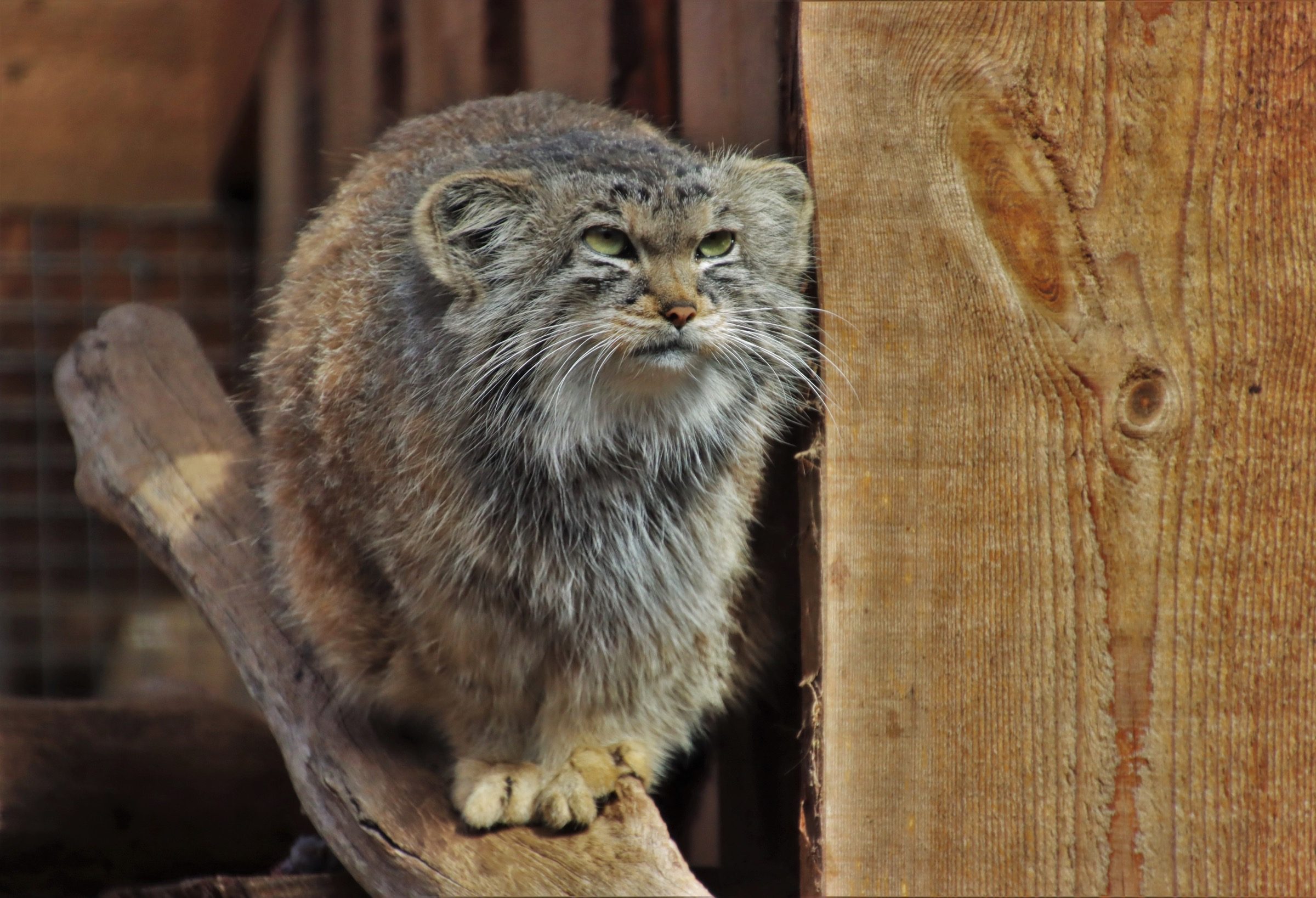
Captive image · Tallinn Zoo · Estonia
Meet the cat
Pallas’s cat
Otocolobus manul
Dense fur, low-set ears and a flattened profile suit cold steppes and rocky uplands.
ConservationLeast ConcernLC
Relative sizeSmall
ActivityCrepuscular
LineageLeopard cat
Weight2–5 kg
Body length46–65 cm
Tail length21–31 cm
The face the internet calls grumpy
That famous expression is not a mood. It is open-country engineering.
A broad, flattened face and small ears set low on the head let a Pallas’s cat peer above rock or grass without revealing much of itself. Its wonderfully unimpressed expression comes from anatomy—not a permanent opinion about the photographer.
The body underneath all that fur is about the size of a domestic cat. Long hair, especially dense on the belly, creates the illusion of a much larger animal and insulates it when crouching on frozen ground. White-tipped hairs produce the frosted finish that dissolves into stone and winter steppe.
Habitat and range
Cold, dry country—with just enough structure to disappear.
Pallas’s cats range from Iran across Central Asia to Mongolia, China, Siberia, and the Himalayas. They occupy mountain grassland, shrub-steppe, rocky alpine desert, and semi-desert, reaching elevations of about 5,600 meters.
The landscape must be open without being empty. Rock outcrops, ravines, talus, and abandoned marmot, fox, or badger burrows provide shelter from weather and predators. Persistent snow deeper than roughly 15 centimeters can limit movement and access to prey.
How it belongs
Built for this particular world.
A low profile in open country
More insulation underneath
Three ways to catch a pika
The conservation reality
Specialization makes every missing rock, burrow, and pika matter.
The Pallas’s cat is classified as Near Threatened and remains widespread but uncommon. Large home ranges and dependence on prey, shelter, and shallow-snow habitat make local losses difficult to detect and reverse.
- Overgrazing and conversion of steppe
- Mining, roads, and infrastructure
- Declining prey and shelter availability
- Poaching, accidental shooting, and snares
- Herding dogs and growing disease exposure
- Climate-driven snow, fire, and vegetation change
What effective work looks like
Conserve the hidden architecture of the steppe.
Protecting Pallas’s cats means protecting the small structures that make a huge open landscape usable: prey colonies, den sites, rocky refuge, and room to move.
Map cats and usable refuge
Range-wide surveys should record not only sightings but also prey, burrows, rocks, snow, and the human pressures shaping occupancy.
Keep prey and dens in the system
Pika and rodent communities, abandoned burrows, and rocky shelter are essential habitat features rather than background scenery.
Reduce avoidable deaths
Ranger training, safer trapping practices, dog management, and community-led enforcement can reduce poaching and accidental killing.
From hope to participation
Share the face—then reveal the landscape behind it.
Pallas’s cats already attract attention. Zoo-EV’s role is to turn that attention toward the steppe, the people studying it, and the quiet habitat details that make survival possible.
Participate in the missionScientific sources, review, and image provenance
Scientific review: August 23, 2026. This account will continue to change when stronger evidence or updated specialist assessments become available.
- IUCN SSC Cat Specialist Group · Pallas’s cat
- Pallas’s Cat Working Group
- Pallas’s Cat International Conservation Alliance
- Image: Lysette Kadakas · captive · Tallinn Zoo · Estonia · CC BY-SA 4.0