
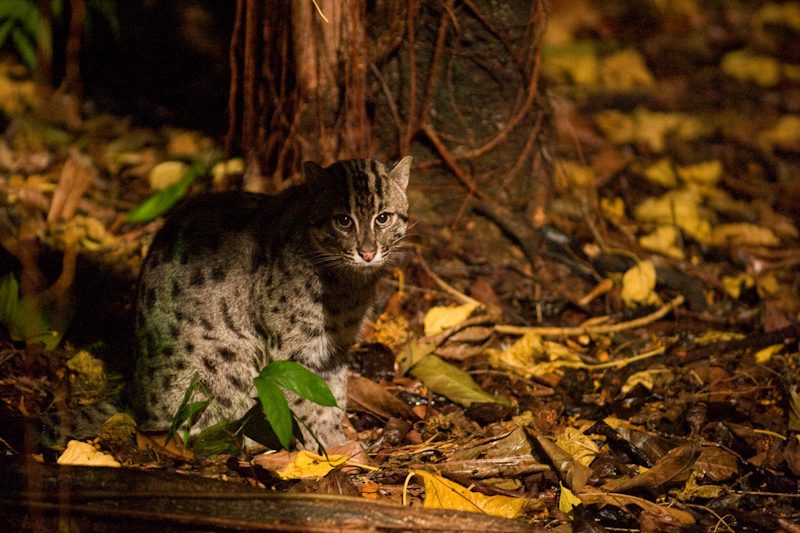
Captive image · Singapore Night Safari
Meet the cat
Fishing cat
Prionailurus viverrinus
A strong swimmer whose survival is inseparable from healthy marshes, mangroves and river edges.
ConservationVulnerableVU
Relative sizeMedium
ActivityNocturnal
LineageLeopard cat
Weight7–16 kg
Body length65–85 cm
Tail length25–30 cm
A cat at the water’s edge
The wetland hunter most people never meet.
A fishing cat does not merely tolerate water. It builds much of its life around it—moving through reed beds, mangroves, marshes, river edges, and flooded landscapes where land and water are always negotiating.
Its name tells only part of the story. Fish are important prey, but fishing cats also take other aquatic animals and terrestrial prey. The deeper distinction is ecological: this is a cat whose future is tied to wetlands, among the planet’s most productive and pressured ecosystems.
Habitat and range
Where healthy wetlands survive, a fishing cat may still be close.
Fishing cats occur patchily across South and Southeast Asia. Current evidence places most of the global population in South Asia, while Southeast Asian populations appear much smaller and more fragmented.
They are strongly associated with wetlands, but they are not confined to untouched wilderness. Records come from mangroves and marshes, agricultural mosaics, aquaculture edges, and even highly altered landscapes. That flexibility creates opportunity—and frequent contact with people.
How it belongs
Built for this particular world.
Built low and strong
Claws ready for mud
Water is part of the hunt
The conservation reality
The cat is vulnerable because the wetland is vulnerable.
The IUCN Red List classifies the fishing cat as Vulnerable. Across its range, pressures accumulate where waterways, food systems, roads, and settlements meet.
- Wetland loss and fragmentation
- Aquaculture, agriculture, and industrial expansion
- Pollution moving through aquatic food webs
- Retaliatory killing and fear-based conflict
- Road mortality, hunting, and illegal trade
What effective work looks like
Conservation begins with water—and with the people who live beside it.
Effective fishing cat conservation protects wetland function while reducing the everyday conditions that lead to conflict. The most useful work is local, patient, and connected.
Know where cats remain
Field surveys, camera traps, and community reporting close major distribution and population gaps.
Keep wetlands functioning
Protecting and restoring mangroves, marshes, corridors, and natural water flow benefits entire living systems.
Make coexistence practical
Locally designed conflict prevention, rapid response, and accurate information can reduce retaliatory killing.
From hope to participation
A fishing cat is an invitation to see a wetland differently.
Zoo-EV will connect support to credible field research, wetland protection, and community coexistence work. Until a specific partnership is published, the first useful action is to learn the landscape behind the cat and share its story accurately.
Participate in the missionScientific sources, review, and image provenance
Scientific review: August 22, 2026. This account will continue to change when stronger evidence or updated specialist assessments become available.
- IUCN SSC Cat Specialist Group · Fishing cat
- Fishing Cat Conservation Alliance · Species overview
- Fishing Cat Conservation Strategy
- Image: Kalyan Varma · captive · Singapore Night Safari · CC BY-SA