
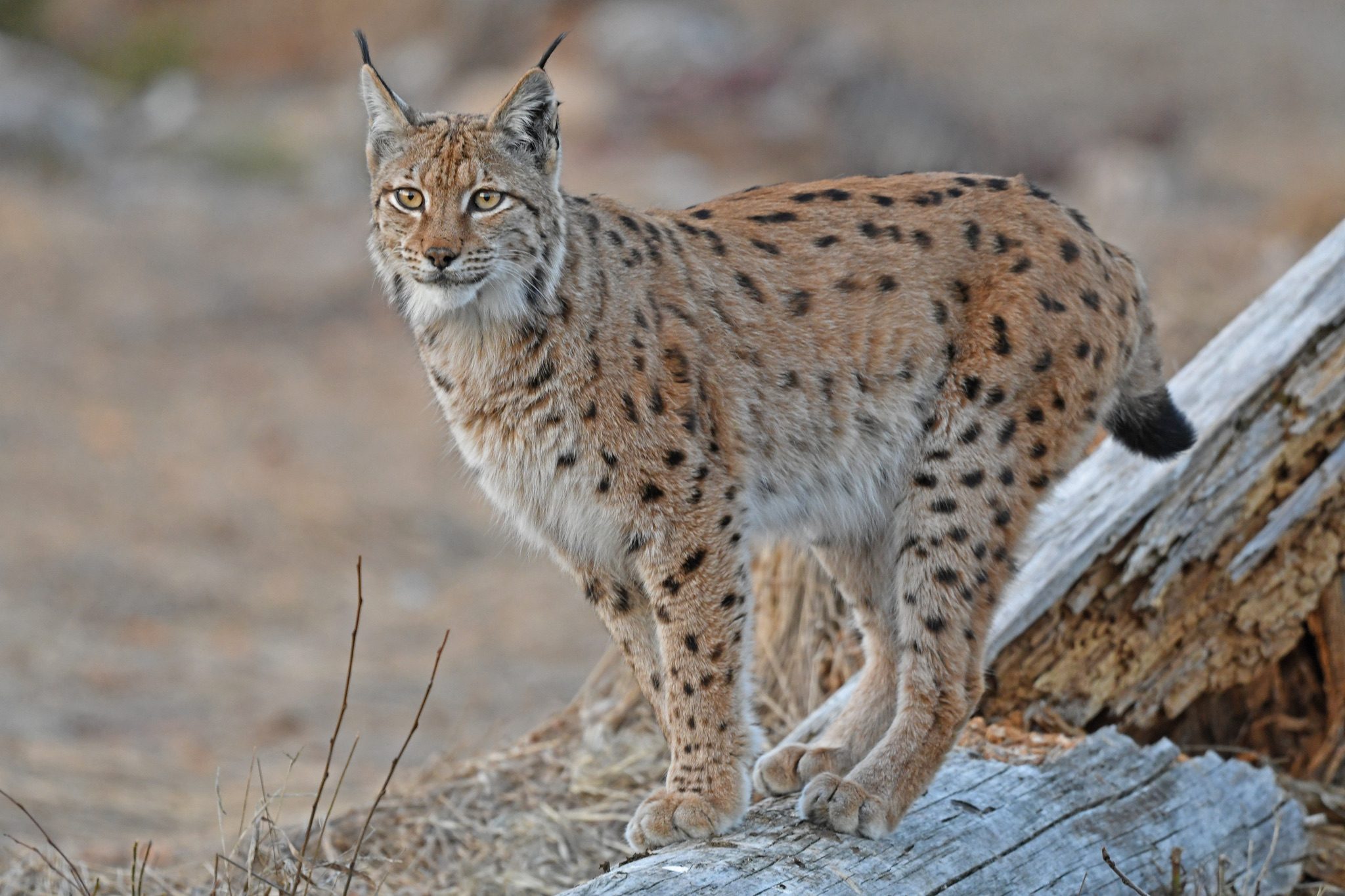
Wild image · Bavaria · Germany
Meet the cat
Eurasian lynx
Lynx lynx
The largest lynx, ranging across a vast sweep of European and Asian forests.
ConservationLeast ConcernLC
Relative sizeMedium
ActivityNocturnal
LineageLynx
Weight17–25 kg
Body length90–120 cm
Tail length19–23 cm
The lynx scaled up
Its map stretches across a continent. Its prey can outweigh it four times over.
The Eurasian lynx is the largest member of its lineage and one of the widest-ranging cats on Earth. Unlike its hare-focused relatives, it commonly hunts roe deer, chamois, and other small ungulates, returning to a kill over several nights when left undisturbed.
Across that enormous range, no single coat defines it. Lynx may be grey, reddish, nearly plain, spotted, or rosetted. Northern cats carry heavier bodies and more winter fur; pale Central Asian animals can move through open rock and steppe far above the tree line.
Habitat and range
From Atlantic forest to Himalayan rock, cover takes many forms.
The species ranges from western Europe through Russia, Central Asia, the Himalayas, and the Pacific edge of Asia. Temperate and boreal forest dominate much of the range, while steppe, scrub, and barren mountain terrain support populations farther south and east.
Its global range is vast, but many European populations are tiny islands created by reintroduction. A map colored across Eurasia can therefore hide local populations numbering only dozens and separated by roads, farms, and political boundaries.
How it belongs
Built for this particular world.
The lynx that hunts ungulates
Winter feet without one winter
A coat written by geography
The conservation reality
A huge range can be made of very small pieces.
The Eurasian lynx is globally Least Concern, yet several reintroduced European populations are Endangered or Critically Endangered. Isolation, low genetic diversity, traffic, poaching, and conflict can stop recovery between neighboring regions.
- Fragmented and isolated populations
- Poaching and retaliatory killing
- Road and rail mortality
- Low genetic diversity after reintroduction
- Habitat and prey loss
- Snares and fur trade in parts of Asia
What effective work looks like
Reconnect the comeback.
Reintroduction returned lynx to parts of western Europe. Long-term recovery now depends on connecting those small populations and building tolerance wherever large carnivores share space with hunters and livestock.
Build genetic connections
Habitat corridors, carefully planned reinforcement, and shared monitoring can prevent small reintroduced groups from becoming genetic islands.
Make coexistence practical
Livestock protection, rapid compensation, and participatory planning reduce pressure for illegal killing.
Study the Asian majority
Much of the species’ range lies in Russia and Asia, where distribution, trends, harvest, and conservation needs remain unevenly documented.
From hope to participation
A return is only the beginning of recovery.
Zoo-EV will connect celebrated reintroductions to the less visible work of genetic monitoring, safe corridors, and community tolerance. Participation helps turn scattered successes into a living continental network.
Participate in the missionScientific sources, review, and image provenance
Scientific review: August 23, 2026. This account will continue to change when stronger evidence or updated specialist assessments become available.
- IUCN SSC Cat Specialist Group · Eurasian lynx
- Cat Conservation Compendium · Eurasian lynx
- Image: Julia Moning · wild · Bavaria · Germany · CC BY 4.0