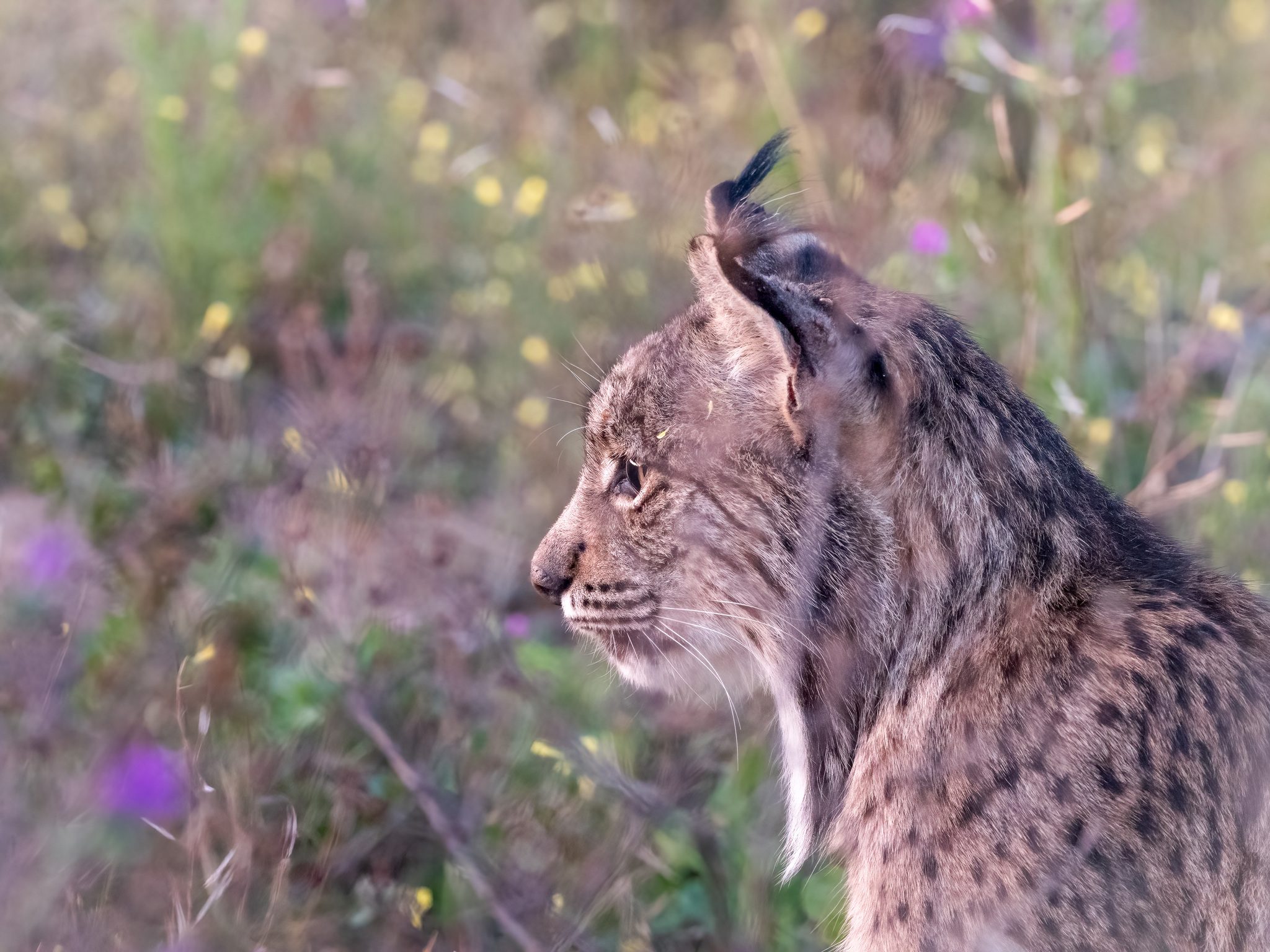
Wild image · Sevilla, Andalucía · Spain
Meet the cat
Iberian lynx
Lynx pardinus
A rabbit specialist whose recovery is one of conservation’s most remarkable recent stories.
ConservationVulnerableVU
Relative sizeMedium
ActivityCrepuscular
LineageLynx
Weight8–16 kg
Body length65–92 cm
Tail length11–16 cm
A recovery story with no finish line
From two surviving populations to a growing return across Spain and Portugal.
In 2002, only two small isolated populations remained, with an estimated 43 adults between them. Habitat restoration, rabbit management, captive breeding, reintroduction, road mitigation, and extraordinary cooperation changed that trajectory. In 2024 the Iberian lynx moved from Endangered to Vulnerable.
That is a conservation triumph—not permission to stop. The IUCN Green Status still considers the species Largely Depleted, and models indicate some populations would disappear again if management ended. Recovery here is a verb, not a trophy.
Habitat and range
A patchwork built around rabbits.
Iberian lynx use Mediterranean mosaics where dense native scrub provides shelter and open pasture supports European rabbits. Breeding females require high rabbit density along with secure dens in hollow trees, rock cavities, brush piles, or thick vegetation.
Cropland and uniform pine or eucalyptus plantations generally provide poor habitat. Moderate human activity can coexist with lynx when the right vegetation and prey remain, but roads and wide open gaps can turn suitable patches into disconnected islands.
How it belongs
Built for this particular world.
A specialist built around one prey
Spots for broken Mediterranean shade
Small gaps become large barriers
The conservation reality
Saved from the edge is not the same as fully recovered.
The Iberian lynx is now Vulnerable after a remarkable increase, but it remains dependent on intensive conservation. Rabbit disease, road deaths, genetic bottlenecks, wildfire, habitat change, and illegal killing could reverse gains.
- Rabbit disease and population collapse
- Road and rail mortality
- Fragmented Mediterranean habitat
- Low genetic diversity
- Wildfire and increasing dryness
- Poaching, traps, and drowning hazards
What effective work looks like
Keep doing the many things that made recovery possible.
No single intervention rescued the Iberian lynx. Success came from coordinated prey restoration, breeding, reintroduction, genetics, road safety, habitat work, landowner participation, and relentless monitoring.
Maintain rabbit-rich habitat
Native scrub mosaics, healthy rabbit populations, and disease surveillance keep the ecological foundation of every lynx population intact.
Connect and reinforce populations
Reintroductions, translocations, corridors, and genetic management expand range while protecting diversity after the historic bottleneck.
Remove preventable mortality
Wildlife crossings, safer roads, escape ramps in irrigation ponds, trap patrols, and rapid conflict response keep recovery moving.
From hope to participation
Hope is most credible when we can explain how it was built.
Zoo-EV will present the Iberian lynx as proof that coordinated conservation works—and that success requires continued participation. The story moves from fear to evidence, then from evidence to sustained commitment.
Participate in the missionScientific sources, review, and image provenance
Scientific review: August 23, 2026. This account will continue to change when stronger evidence or updated specialist assessments become available.
- IUCN SSC Cat Specialist Group · Iberian lynx
- IUCN Red List 2024 assessment · Iberian lynx
- Image: Nils · wild · Sevilla, Andalucía · Spain · CC BY 4.0