
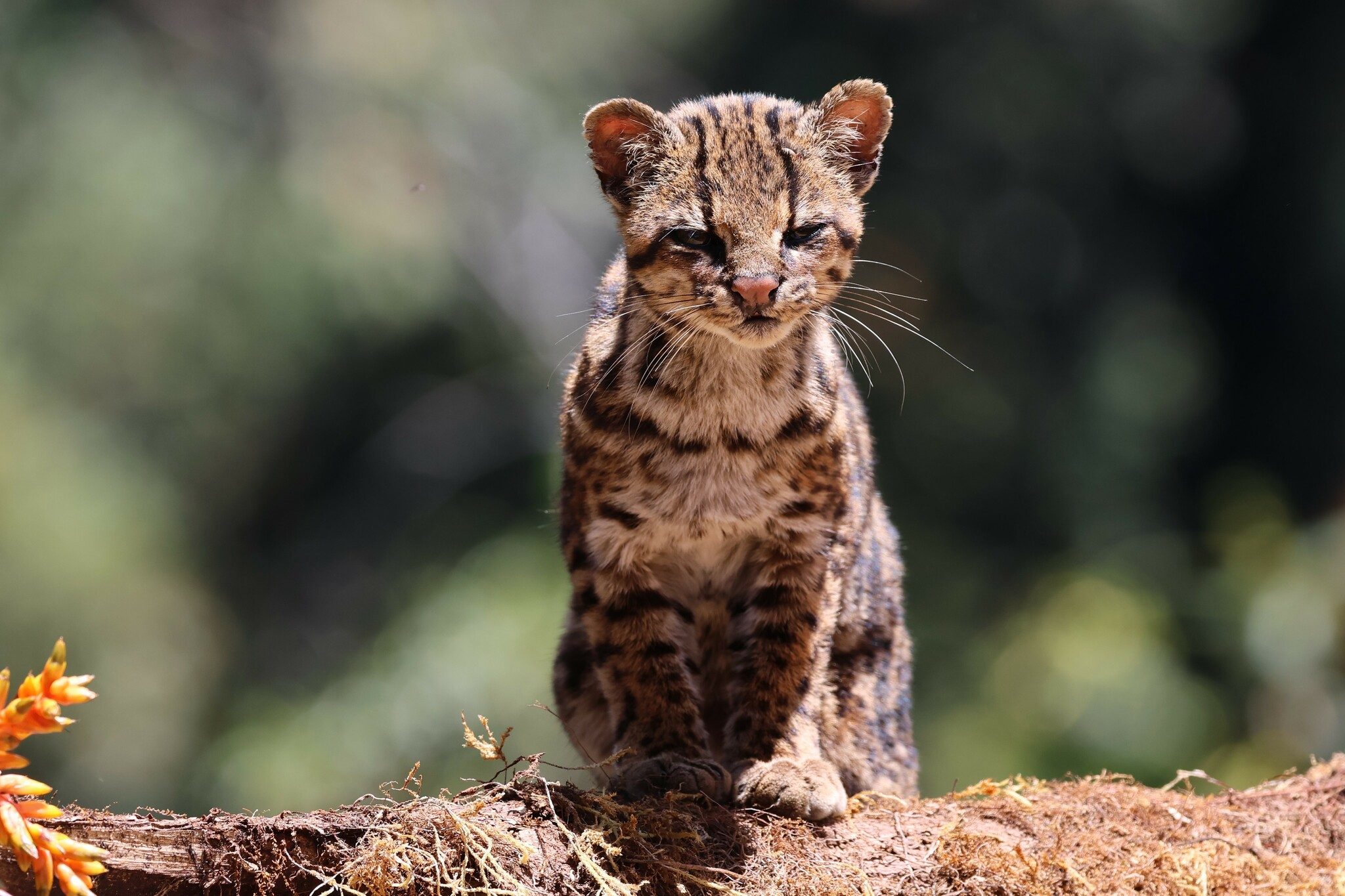
Wild image · Colombia · Exact location obscured
Meet the cat
Clouded tiger cat
Leopardus pardinoides
A recently proposed species associated with cloud forests along the Central American and Andean cordilleras.
ConservationNot EvaluatedNE
Relative sizeSmall
ActivityNocturnal
LineageOcelot
Weight1.5–3.5 kg
Body lengthAbout 38–59 cm
Tail lengthAbout 20–42 cm
The cat science learned to see
No new cat appeared in 2024. An old identity finally came into focus.
For generations, cloud-forest tiger cats from Central America and the Andes were folded into the northern tiger cat. A 2024 study brought coat pattern, body form, geography, climate, and genetics together—and found a distinct species hiding inside the older name.
Its small, irregular rosettes often join into short, cloud-like bands, inspiring the common name. The pattern is more than decoration: it is one visible part of a cat associated with cool, wet mountain forest rather than the savannas and dry shrublands occupied by its northern relative.
Habitat and range
Follow the mountains and the clouds become a corridor.
The proposed range traces the Talamanca mountains of Costa Rica and western Panama, then reappears along the Andes from Venezuela and Colombia through Ecuador and Peru toward Bolivia and northwestern Argentina.
Clouded tiger cats are most strongly associated with montane and cloud forests, frequently above 1,500 meters. These cool, moisture-rich habitats can look continuous on a map while roads, farms, settlements, and warming temperatures divide them into ecological islands.
How it belongs
Built for this particular world.
Clouds written into the coat
A highland identity
Evidence beyond a museum drawer
The conservation reality
Recognition makes the conservation question smaller—and more urgent.
The clouded tiger cat has not yet received a separate IUCN Red List assessment. Earlier Vulnerable assessments included these populations within the northern tiger cat, so the risk shown for the old combined species cannot simply be copied onto the newly recognized one.
- Loss and fragmentation of cloud forest
- Agriculture and settlement on mountain slopes
- Road mortality
- Killing after poultry losses
- Illegal capture and trade
- Dogs, disease, and climate-driven habitat shifts
What effective work looks like
A new name needs its own evidence base.
The taxonomic work changes the questions conservationists must ask: where distinct populations remain, how well mountain corridors connect them, and whether threats differ from one end of the range to the other.
Map the real range
Verified camera-trap records, genetics, and consistent identification can test the proposed boundaries and locate overlooked populations.
Keep mountain forests connected
Protection and restoration across elevation bands allow cats and prey to move between forest blocks as climate and land use change.
Build a species-specific assessment
Population estimates, threat measurements, and regional monitoring are needed before an independent Red List category can be assigned confidently.
From hope to participation
The 41st cat is an invitation to watch science working.
Zoo-EV will keep this treatment visibly dated rather than presenting taxonomy as finished. Participation means supporting the field records, local partnerships, and habitat protection that remain valuable even as classifications are reviewed.
Participate in the missionScientific sources, review, and image provenance
Scientific review: August 23, 2026. This account will continue to change when stronger evidence or updated specialist assessments become available.
- 2024 Scientific Reports study · Clouded tiger cat
- 2024 PLOS ONE study · Central American clouded oncilla
- Mammal Diversity Database · Leopardus pardinoides
- Image: Don Wellmann · wild · Colombia · Exact location obscured · CC0 1.0