
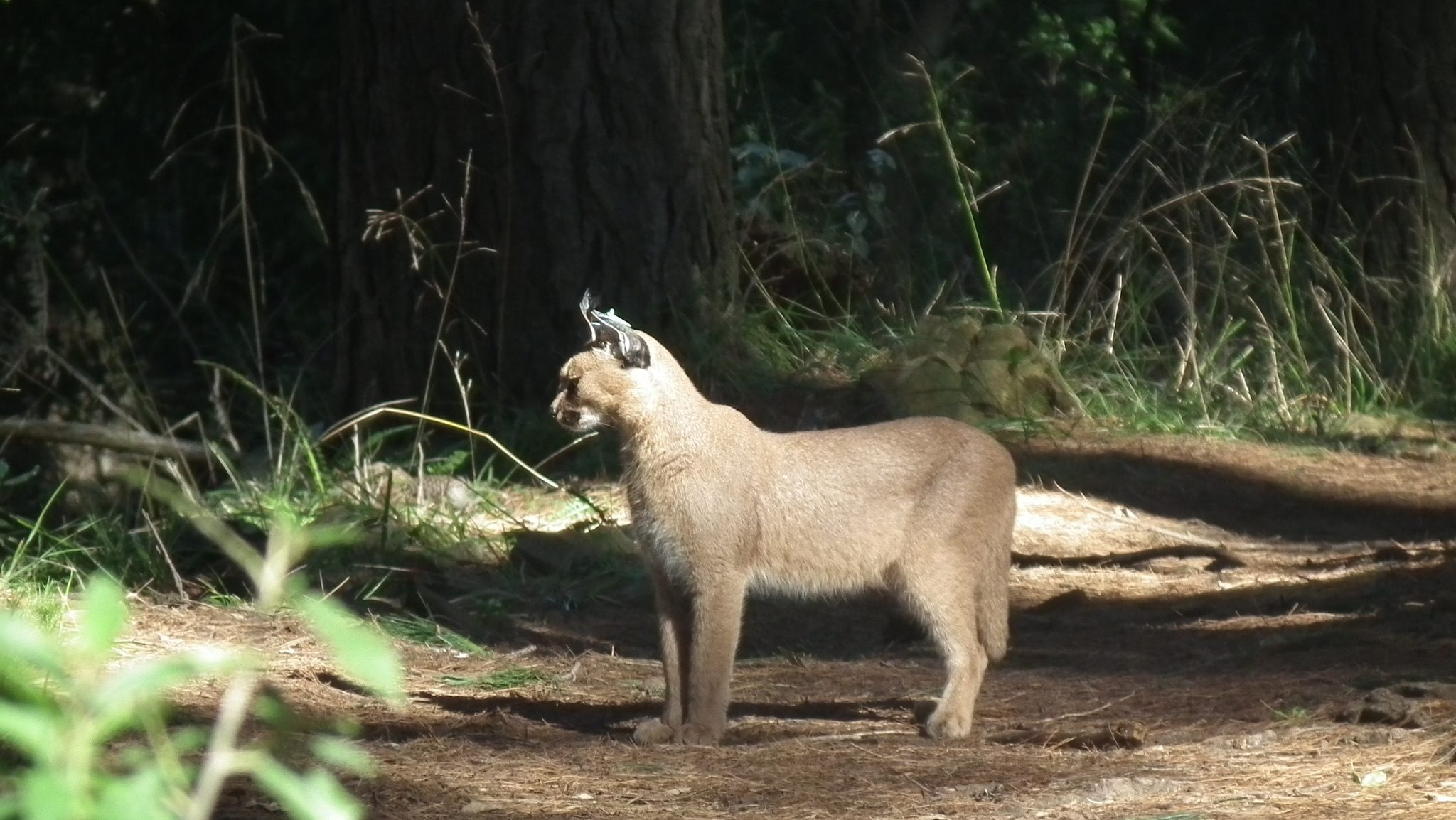
Wild image · Table Mountain · South Africa
Meet the cat
Caracal
Caracal caracal
Black ear tufts and explosive vertical leaps make this open-country hunter unmistakable.
ConservationLeast ConcernLC
Relative sizeMedium
ActivityNocturnal
LineageCaracal
Weight6–18 kg
Body length80–100 cm
Tail length20–34 cm
A cat named for its ears
Those black tufts are expressive—but the entire cat is built to launch.
Caracal comes from the Turkish karakulak: ‘black ear.’ The tall, dark-backed ears and their long tufts may be the first detail people notice, but beneath them is a powerful open-country hunter able to spring upward and strike birds from the air with its forepaws.
It is not a lynx, despite the ears. The caracal’s closest living relatives are the serval and African golden cat. Across a vast range from Africa to northwestern India, the same spare silhouette moves through deserts, savannas, scrub, rocky mountains, and woodland edges.
Habitat and range
Open country—with enough cover to disappear before the leap.
Caracals occupy dry woodland, savanna, steppe, scrub, semi-desert, and mountains. They generally avoid true sand deserts and equatorial rainforest, using rocks, vegetation, and broken terrain as concealment and daytime shelter.
The species remains common in parts of southern and eastern Africa, including livestock landscapes, yet becomes rare and fragmented through North Africa, the Middle East, Central Asia, Pakistan, and India. A global Least Concern label contains very different regional realities.
How it belongs
Built for this particular world.
Ears that listen—and signal
Explosive lift from the hind legs
Sand-ready feet
The conservation reality
Common somewhere does not mean secure everywhere.
The caracal is Least Concern globally, but populations in Asia and North Africa are sparse, declining, or poorly known. Persecution intensifies wherever livestock losses are blamed on the cat.
- Retaliatory killing after livestock loss
- Trapping, shooting, and poisoning
- Habitat fragmentation in Asia and North Africa
- Road mortality
- Declining wild prey
- Capture and trade as exotic pets
What effective work looks like
Make coexistence more reliable than retaliation.
Caracals can persist near people when prey, cover, and tolerance remain. Practical livestock protection and regional monitoring can prevent a widespread species from vanishing one population at a time.
Protect small stock before conflict starts
Secure night enclosures, attentive herding, guardian animals, and better carcass investigation reduce losses and misplaced blame.
Map the range’s quiet edges
Surveys in North Africa and Asia can identify remnant populations, corridors, and mortality hotspots that a global status obscures.
Reduce indiscriminate control
Targeted, evidence-led responses protect livestock more effectively than broad poisoning, trapping, or shooting campaigns.
From hope to participation
The famous ears can open a conversation about coexistence.
Zoo-EV will connect the caracal’s athletic appeal to field evidence, safer livestock practices, and the overlooked Asian part of its range. Participation means helping admiration travel beyond the photograph.
Participate in the missionScientific sources, review, and image provenance
Scientific review: August 23, 2026. This account will continue to change when stronger evidence or updated specialist assessments become available.
- IUCN SSC Cat Specialist Group · Caracal
- Cat Conservation Compendium · Caracal
- Image: Shaun Swanepoel · wild · Table Mountain · South Africa · CC BY 4.0