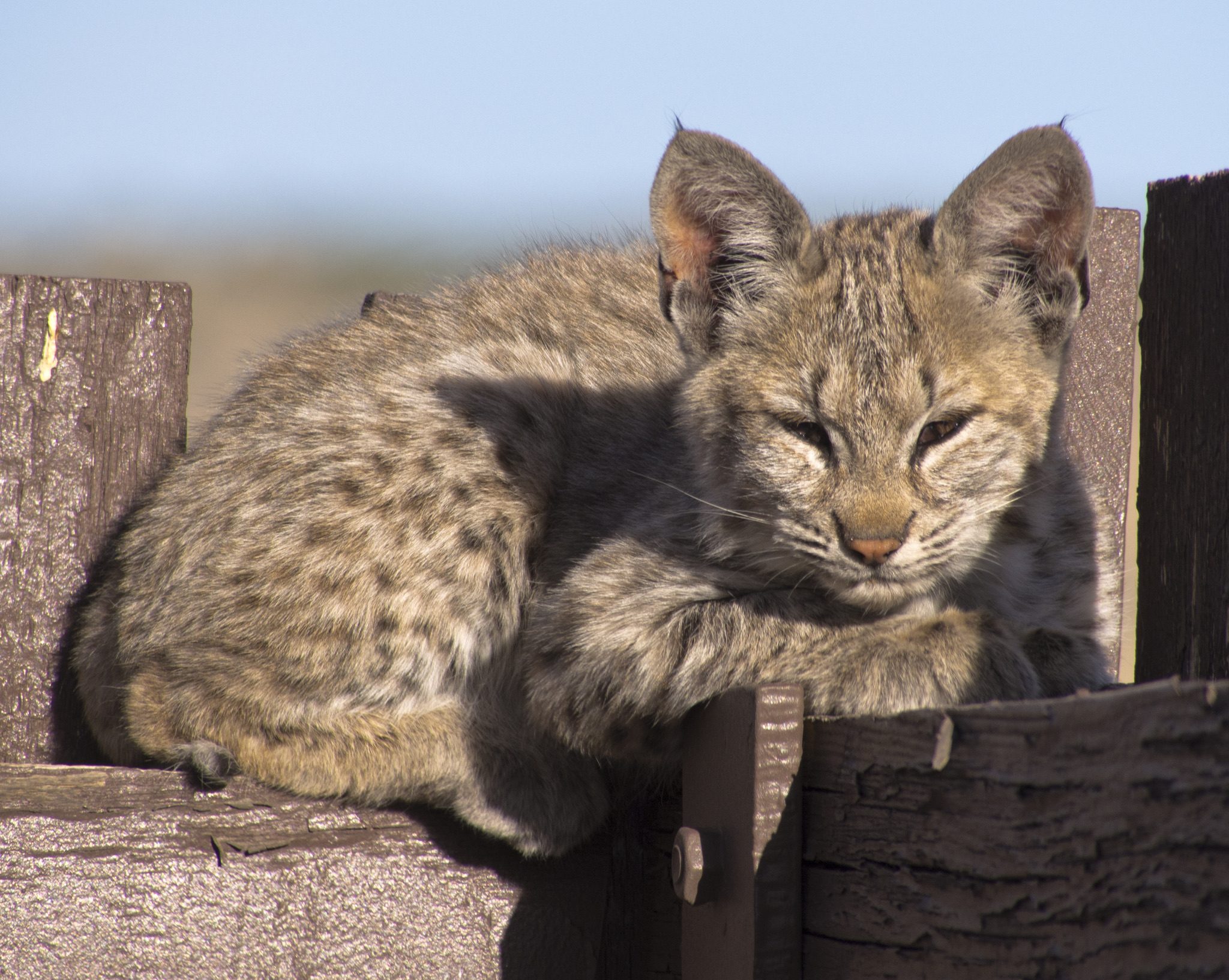
Wild image · Box Elder County, Utah · United States
Meet the cat
Bobcat
Lynx rufus
A highly adaptable lynx able to live from desert margins to snowy forests and suburban edges.
ConservationLeast ConcernLC
Relative sizeMedium
ActivityCrepuscular
LineageLynx
Weight6–20 kg
Body length50–120 cm
Tail length9–25 cm
The lynx that refuses one definition
Desert cactus. Snowy forest. Suburban fence. The bobcat makes room for itself.
The bobcat is named for its short—or ‘bobbed’—tail, whose white underside helps distinguish it from the black-tipped tails of other lynx. Everything else varies: coats can be grey, buff, reddish, plain, striped, or spotted, and northern cats tend to be larger than southern ones.
Its range crosses most of the continental United States, southern Canada, and Mexico. A bobcat may shelter in woodland, hunt a desert wash, climb a cactus when threatened, or slip through a city after dark—so long as cover, prey, and a safe place to den remain.
Habitat and range
Adaptability still needs cover.
Bobcats live in boreal, hardwood, and mixed forest, coastal swamp, scrub, desert, grassland, mountains, and some urban landscapes. Dense vegetation or broken terrain provides the concealment needed for ambush hunting and rest.
They can tolerate development better than many cats, but not a landscape stripped of woody cover. Roads, rodenticides, disease, and genetic isolation can turn a seemingly successful urban population into a vulnerable one.
How it belongs
Built for this particular world.
A menu that changes with the season
Compact paws for varied ground
Ambush cover almost anywhere
The conservation reality
North America’s most common cat still deserves careful counting.
The bobcat is globally Least Concern and widespread, yet monitoring is inconsistent—especially in Mexico and in areas with heavy harvest. Urban survival also brings roads, toxins, and disease closer.
- Habitat loss and fragmented cover
- Vehicle strikes
- Rodenticide exposure and mange
- High commercial fur harvest
- Retaliation after livestock loss
- Poor population data in parts of the range
What effective work looks like
Measure adaptability instead of assuming it.
A familiar species can be overlooked precisely because it appears resilient. Reliable monitoring and connected cover are needed to keep harvest and development within what local populations can withstand.
Monitor before setting harvest levels
Comparable population estimates, survival data, and trade records can test whether local trapping remains sustainable.
Connect urban and rural cover
Vegetated corridors, road crossings, and intact drainages let bobcats move without concentrating risk at highways and development gaps.
Reduce secondary poisoning
Wildlife-safe rodent control protects bobcats from toxic prey and may reduce vulnerability to severe mange.
From hope to participation
Common is not the opposite of worth knowing.
Zoo-EV will use the bobcat to show how everyday wildlife decisions—road design, rodent control, habitat cover, and responsible harvest—shape a cat that many people live beside without ever seeing.
Participate in the missionScientific sources, review, and image provenance
Scientific review: August 23, 2026. This account will continue to change when stronger evidence or updated specialist assessments become available.
- IUCN SSC Cat Specialist Group · Bobcat
- Cat Conservation Compendium · Bobcat
- Image: Robbie Hannawacker · wild · Box Elder County, Utah · United States · CC0 1.0