What a camera trap knows
One passing animal can redraw a map, confirm a survivor, or reveal how little we understand about a forest.
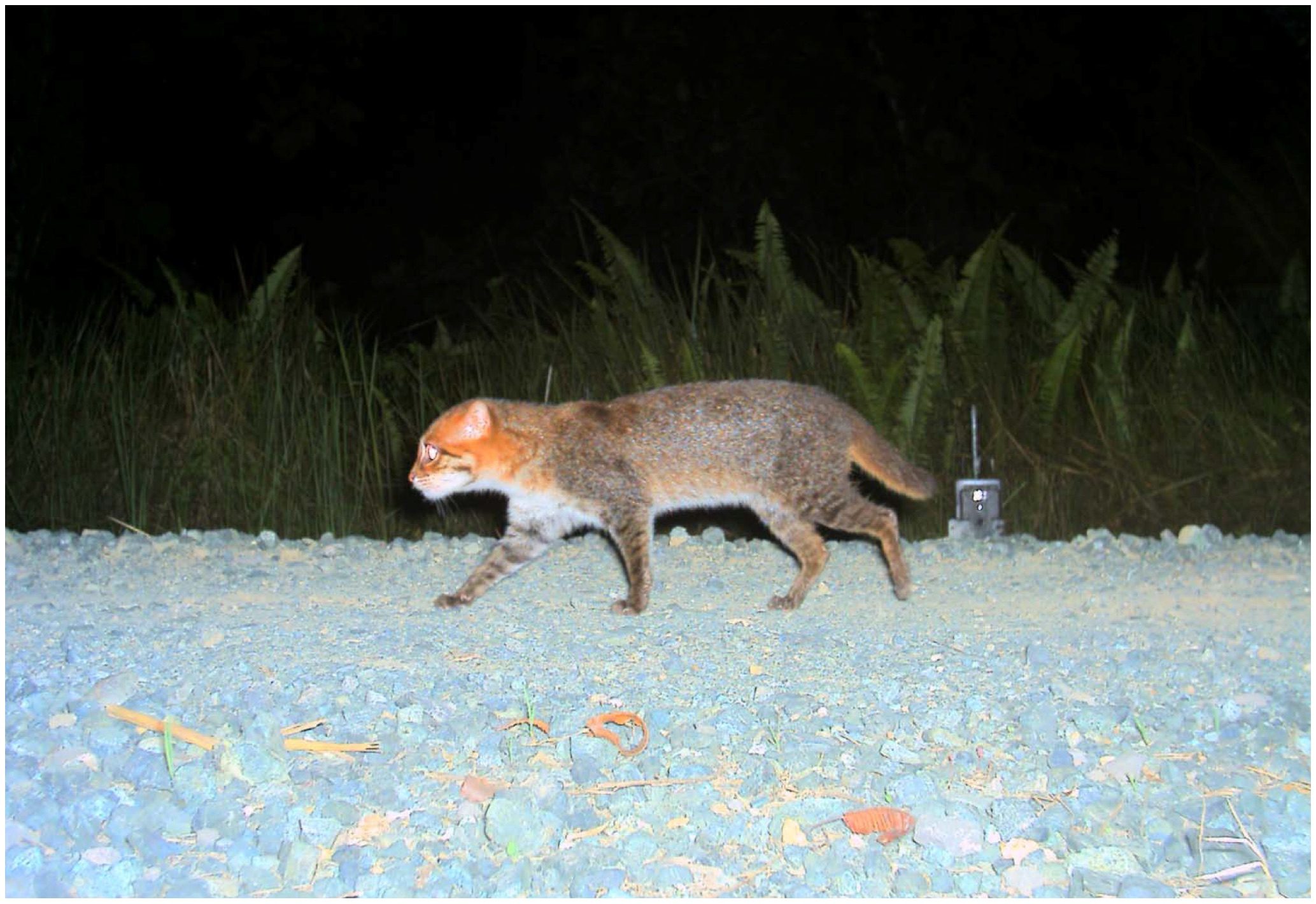
Wild image · Tangkulap Forest Reserve, Sabah, Malaysia · Andreas Wilting et al.
Published August 24, 2026
A camera trap waits without impatience. Heat and movement trigger the shutter; the animal chooses the moment. There may be no perfect light, clean background, or second chance.
For elusive wild cats, that rough frame can be more valuable than a flawless portrait. It is not merely an image of an animal. It is evidence that the animal passed through a particular place at a particular time.
Presence
The frame says: this cat was here.
That simple fact can confirm a range, identify a corridor, or show that a species persists where no one had recently recorded it. With enough carefully placed cameras, researchers can compare sites, study activity patterns, and sometimes recognize individuals by their markings.
The flat-headed cat in this image is tied to lowland wetlands. A detection beside wet forest connects the cat to the condition of rivers, peatlands, aquatic prey, and the narrow habitat edges on which it depends.
Grainy is not weak. A field image can carry more truth than polish.
Absence
No photograph is not the same as no cat.
Rare species may pass between cameras, use a site only seasonally, or move in ways a survey was not designed to detect. This is especially important for cats such as the Bornean bay cat, which can remain unrecorded even during substantial survey efforts.
Researchers account for detectability, repeat surveys, combine records, and use tools such as genetic sampling or environmental DNA. Honest field science keeps the uncertainty attached to the conclusion.
The larger picture
The camera records an animal. The project must understand a system.
A photograph cannot by itself explain whether a population is growing, whether the water is clean, or whether a forest connection will survive. Those questions need sustained surveys, habitat measurements, local knowledge, and time.
Zoo-EV will show field imagery for what it is: not a lesser substitute for a dramatic photograph, but a doorway into the evidence. The pixels may be rough. The responsibility to read them carefully is exacting.
Continue the discovery
Meet the cats in this story.
Scientific sources and image provenance
Image: Wild image · Tangkulap Forest Reserve, Sabah, Malaysia. Andreas Wilting et al.. CC BY-SA 2.5.