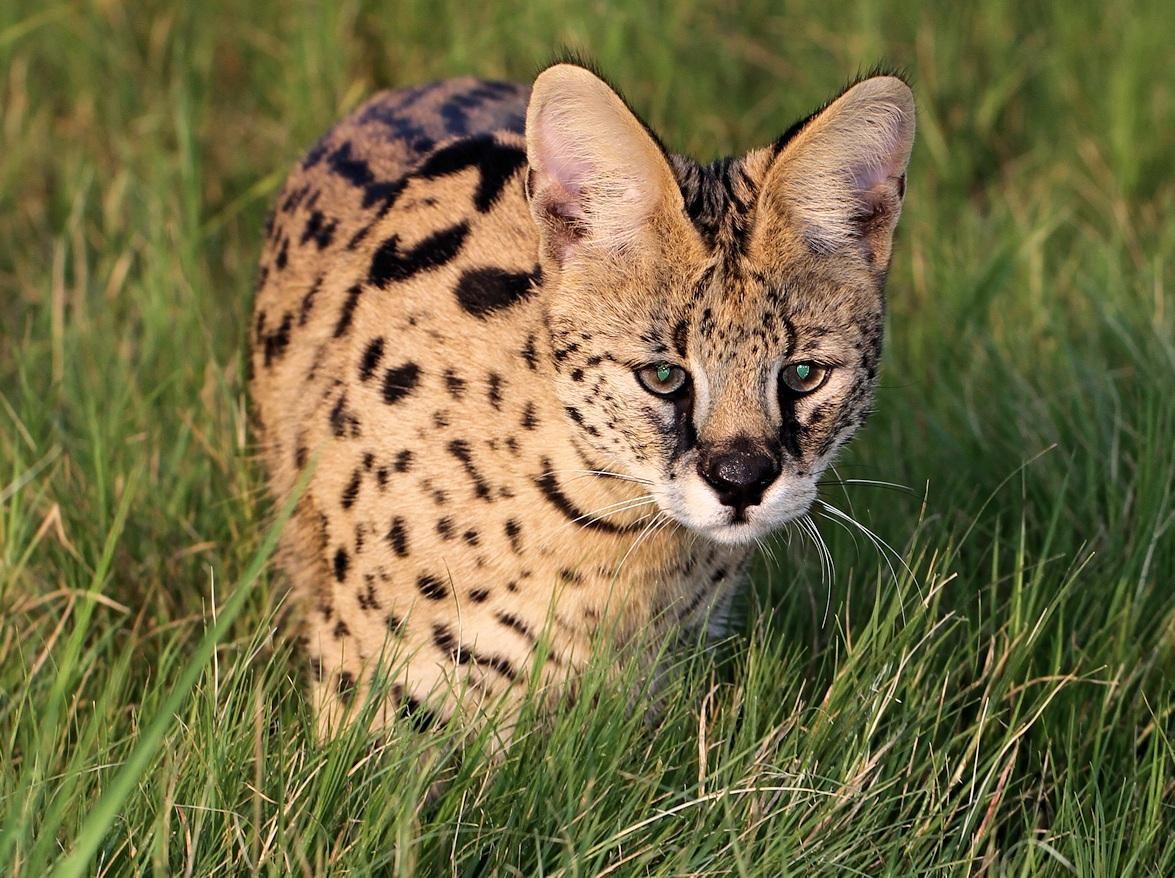
Wild image · Blyde River · South Africa
Meet the cat
Serval
Leptailurus serval
Long legs and enormous ears turn tall grass into a hunting advantage.
ConservationLeast ConcernLC
Relative sizeMedium
ActivityCrepuscular
LineageCaracal
Weight7–18 kg
Body length59–100 cm
Tail length28–38 cm
Hunting begins with a sound under the grass
The serval does not need to see the mouse before it knows where to land.
Enormous ears swivel above the grass, locating prey that remains completely hidden. Once the sound is fixed, long hind legs launch the serval into a high, arcing pounce. The forepaws strike down at the point where hearing says the animal must be.
That strange, elegant build is extraordinarily effective: field studies have recorded about 50% hunting success overall and much higher success when hunting rodents. A serval may also clap its front paws around a bird or insect in midair—and some highland servals are entirely black.
Habitat and range
Long grass matters. Water makes the difference.
Servals use marshes, reed beds, wet grassland, riparian corridors, and moist savannas across much of sub-Saharan Africa. They can enter forest along waterways and reach high elevations, but they avoid true desert and the unbroken rainforest interior.
Some altered landscapes support remarkable densities when wetlands, cover, and abundant rodents remain. That apparent adaptability has limits: drainage, burning, overgrazing, roads, and poisoned food chains can remove the exact conditions that make a field usable.
How it belongs
Built for this particular world.
Ears tuned to hidden movement
Legs built for the vertical hunt
A rodent specialist with options
The conservation reality
A wetland hunter loses ground when the ground dries out.
The serval is Least Concern and considered stable globally, but wetland loss can erase local populations quickly. Roads, hunting, skin trade, and retaliation add pressure around the water sources where servals concentrate.
- Wetland drainage and development
- Grassland burning and overgrazing
- Road mortality
- Indiscriminate predator control
- Skin trade and hunting
- Retaliation over occasional poultry loss
What effective work looks like
Protect the wet places that make the leap possible.
Serval conservation is wetland conservation. It also means recognizing the cat as a major rodent predator and designing farms, roads, and settlements around that ecological value.
Retain wet grass and reed cover
Protecting marshes, stream edges, and seasonal wetlands preserves both hunting cover and the serval’s core rodent prey.
Make wetland roads safer
Crossing structures, fencing, speed reduction, and mortality monitoring can address concentrated roadkill along riparian routes.
Replace fear with practical poultry protection
Secure coops and accurate loss identification reduce retaliatory killing of a cat that rarely attacks larger livestock.
From hope to participation
One listening cat can make a wetland’s hidden life audible.
Zoo-EV will use the serval’s unforgettable hunt to lead people toward wetland protection, road mitigation, and coexistence. The leap is the invitation; the living marsh is the mission.
Participate in the missionScientific sources, review, and image provenance
Scientific review: August 23, 2026. This account will continue to change when stronger evidence or updated specialist assessments become available.
- IUCN SSC Cat Specialist Group · Serval
- Cat Conservation Compendium · Serval
- Image: Wynand Uys · wild · Blyde River · South Africa · CC BY 4.0