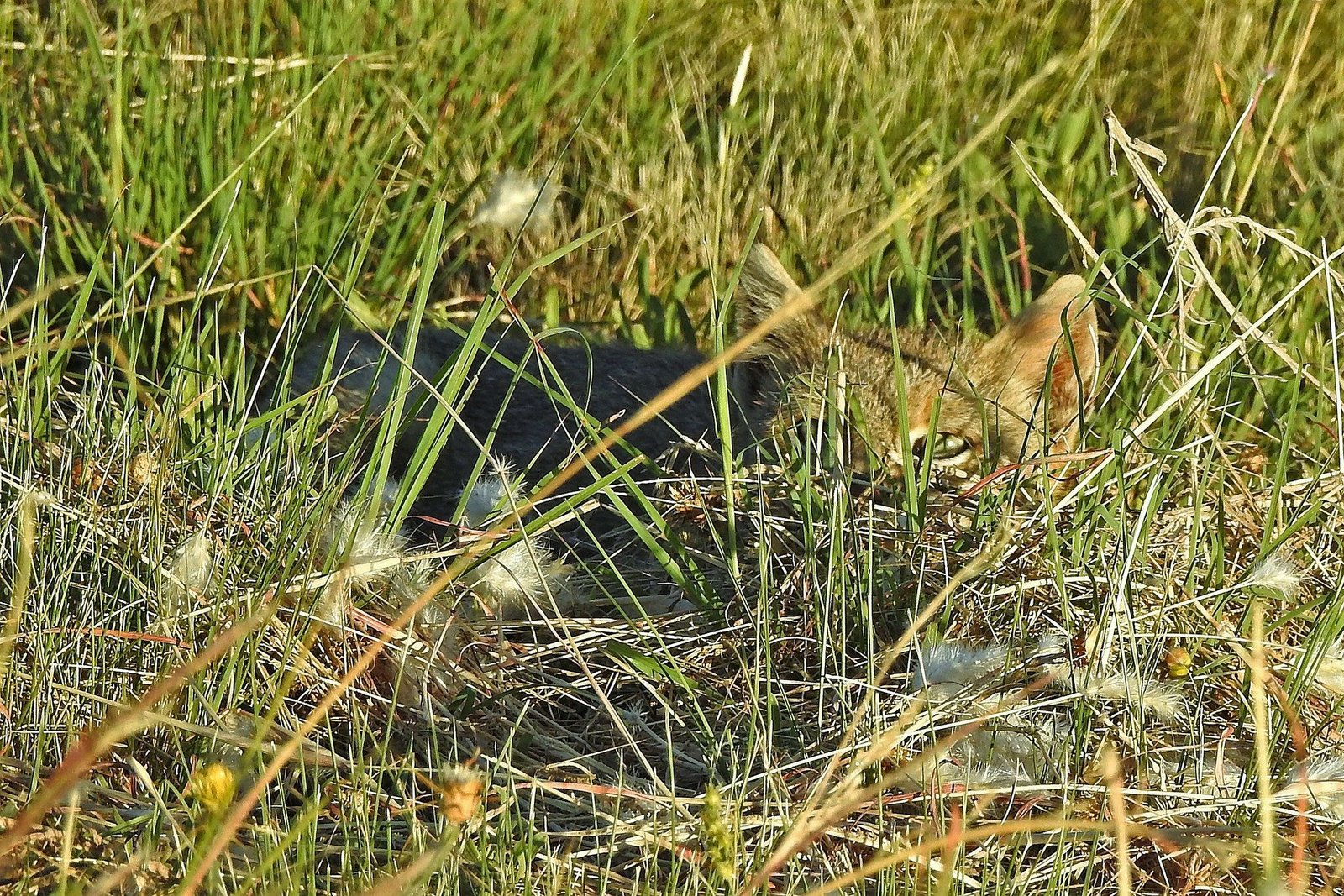
Hugo Hulsberg · CC0 1.0

About this image
The photo source identifies this animal as Southern Pampas Cat (Leopardus pajeros). Some classifications recognise it as a separate species; others group it with other pampas cats. This page follows the grouped classification.
A boundary changes the question.
Different treatments split or combine cats within the Pampas Cat complex. The conservation unit—and the meaning of a range or assessment—changes with that choice.
Species definition can change the conservation unit
Conceptual explanation; not a phylogenetic tree or a claim of consensus.Its world.
Its conservation.
Resolve the complex range-wide
Genetics, morphology, and geographically balanced sampling can clarify whether conservation is dealing with one variable species or several.
Survey the forgotten open lands
Camera traps, records, and long-term monitoring are needed beyond forests and famous reserves, especially in grassland and dry-country mosaics.
Work with local meaning
Coexistence programs should respect the cat’s cultural significance while reducing poultry losses, dog attacks, road deaths, and hunting.
Hugo Hulsberg · CC0 1.0
About this image
The photo source identifies this animal as Southern Pampas Cat (Leopardus pajeros). Some classifications recognise it as a separate species; others group it with other pampas cats. This page follows the grouped classification.
Keep the method
in the picture.
Taxonomy compares lines of evidence. Population and range records must state which treatment they describe.
What don’t we know?
How should conservation priorities be compared when sources use different units?
Geographic context
South America.
This is geographic context, not a mapped distribution. Range polygons require taxon, date and reuse review before publication.
A different cat.
A different question.
Sources & Research Notes
Inherited research adapted to the locked editorial lesson; current assessment and independent scientific sign-off pending.
Assessment year and field-data period are different. A source check does not update an assessment.