Sunda Leopard Cat
Prionailurus javanensis
Science does not move on one clock.
Look closer ↓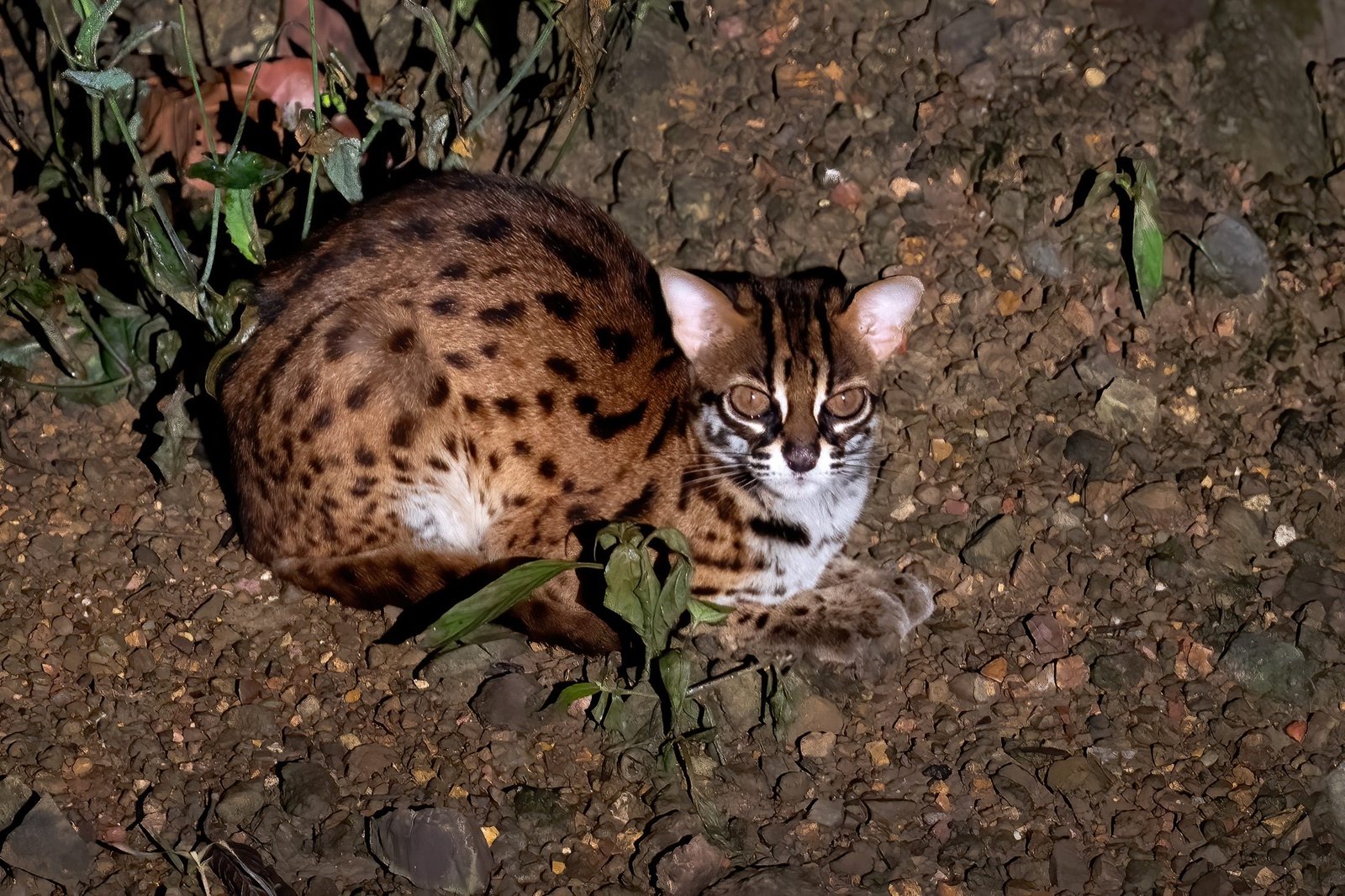
JJ Harrison · CC BY-SA 3.0

Science does not move on one clock.
A taxonomic split and a conservation assessment are separate pieces of work. Recognising the Sunda Leopard Cat does not justify copying the mainland cat’s risk category into its record.
Taxonomy can move faster than conservation assessment
Conceptual explanation; not a phylogenetic tree or a claim of consensus.Its world.
Its conservation.
Reassess after the split
Population, distribution, and threat data need to be evaluated for the Sunda species rather than inherited from the former combined leopard-cat assessment.
Protect remaining connections
Forest cover and movement routes matter even where cats also use plantations or agricultural mosaics.
See the island populations
Survey and protection priorities should reflect the acute vulnerability of restricted Philippine and other island populations.
JJ Harrison · CC BY-SA 3.0
Keep the method
in the picture.
Every assessment must be matched to the taxon it evaluated, including its geographic and taxonomic scope.
What don’t we know?
Which assessment evidence applies specifically to the adopted Sunda treatment?
Geographic context
Sunda region.
This is geographic context, not a mapped distribution. Range polygons require taxon, date and reuse review before publication.
A different cat.
A different question.
Sources & Research Notes
Inherited research adapted to the locked editorial lesson; current assessment and independent scientific sign-off pending.
- IUCN SSC Cat Specialist Group · Sunda leopard cat
- Mammal Diversity Database · Prionailurus javanensis
- 2017 revised taxonomy of Felidae
Assessment year and field-data period are different. A source check does not update an assessment.