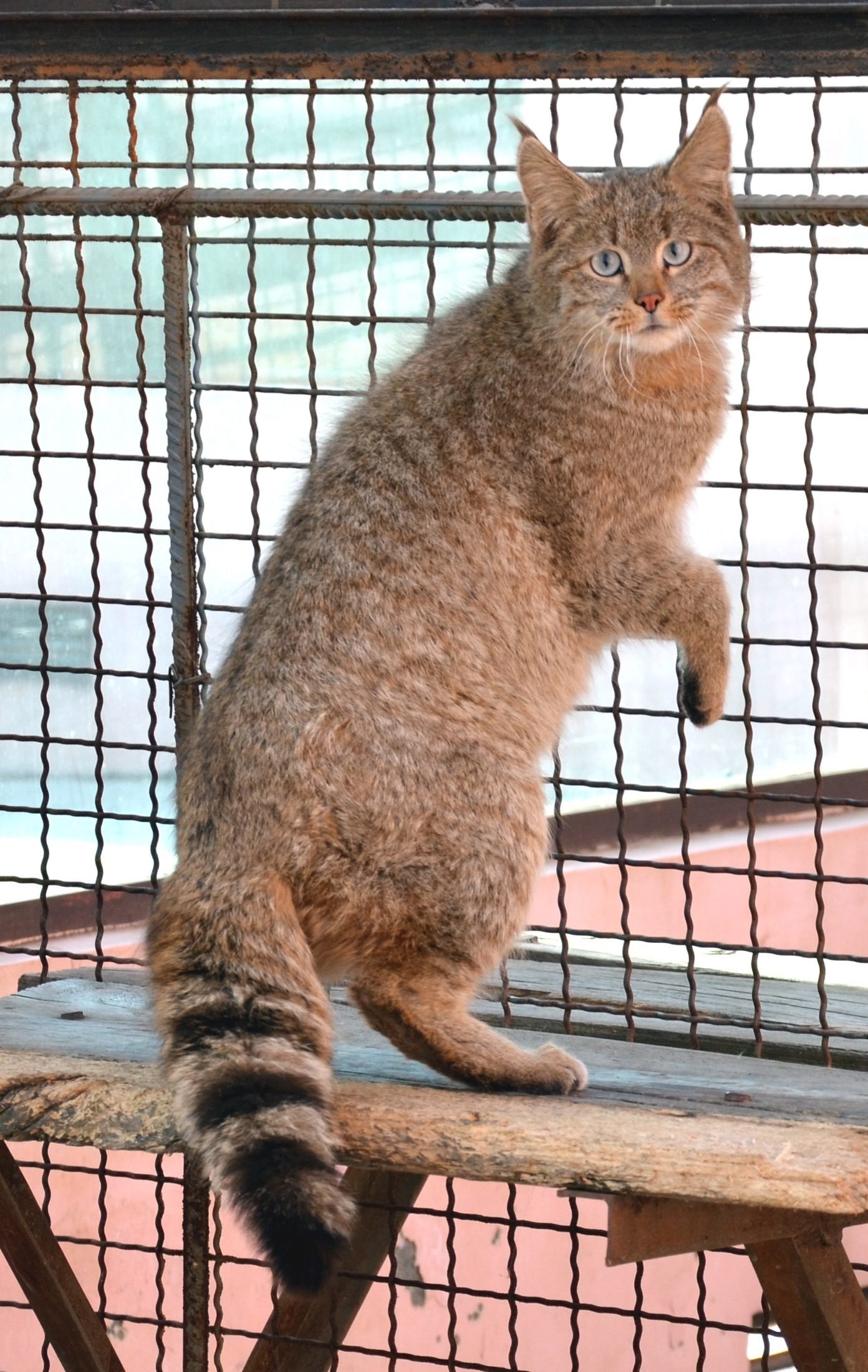
西宁野生动物园 (Xining Wildlife Park) · CC BY-SA 3.0
_in_XiNing_Wild_Zoo.jpg)
Where do we draw the line?
The Chinese Mountain Cat has a distinct public identity in Zoo-EV’s framework. Genomic evidence can complicate that boundary, showing why a familiar species name and a scientific treatment are not always the same decision.
Genomics can challenge where we draw species boundaries
Conceptual explanation; not a phylogenetic tree or a claim of consensus.Its world.
Its conservation.
Replace broad poisoning campaigns
Grazing management and ecosystem-based responses can address outbreaks without removing prey or exposing predators to toxic chemicals.
Survey the plateau systematically
Camera traps, genetics, and coordinated records can identify populations, corridors, and priority landscapes.
Strengthen protection on the ground
Enforcement against skin trade, road mitigation, and evaluation of protected areas can turn national protection into measurable survival.
西宁野生动物园 (Xining Wildlife Park) · CC BY-SA 3.0
Keep the method
in the picture.
Genomic comparisons test ancestry and relationships; conclusions depend on samples and the species concept being used.
What don’t we know?
How should different taxonomic treatments inform protection of distinctive wild populations?
Geographic context
Eastern Qinghai–Tibet Plateau.
This is geographic context, not a mapped distribution. Range polygons require taxon, date and reuse review before publication.
A different cat.
A different question.
Sources & Research Notes
Inherited research adapted to the locked editorial lesson; current assessment and independent scientific sign-off pending.
Assessment year and field-data period are different. A source check does not update an assessment.