sunnyjosef · CC BY 4.0
A name can mislead.
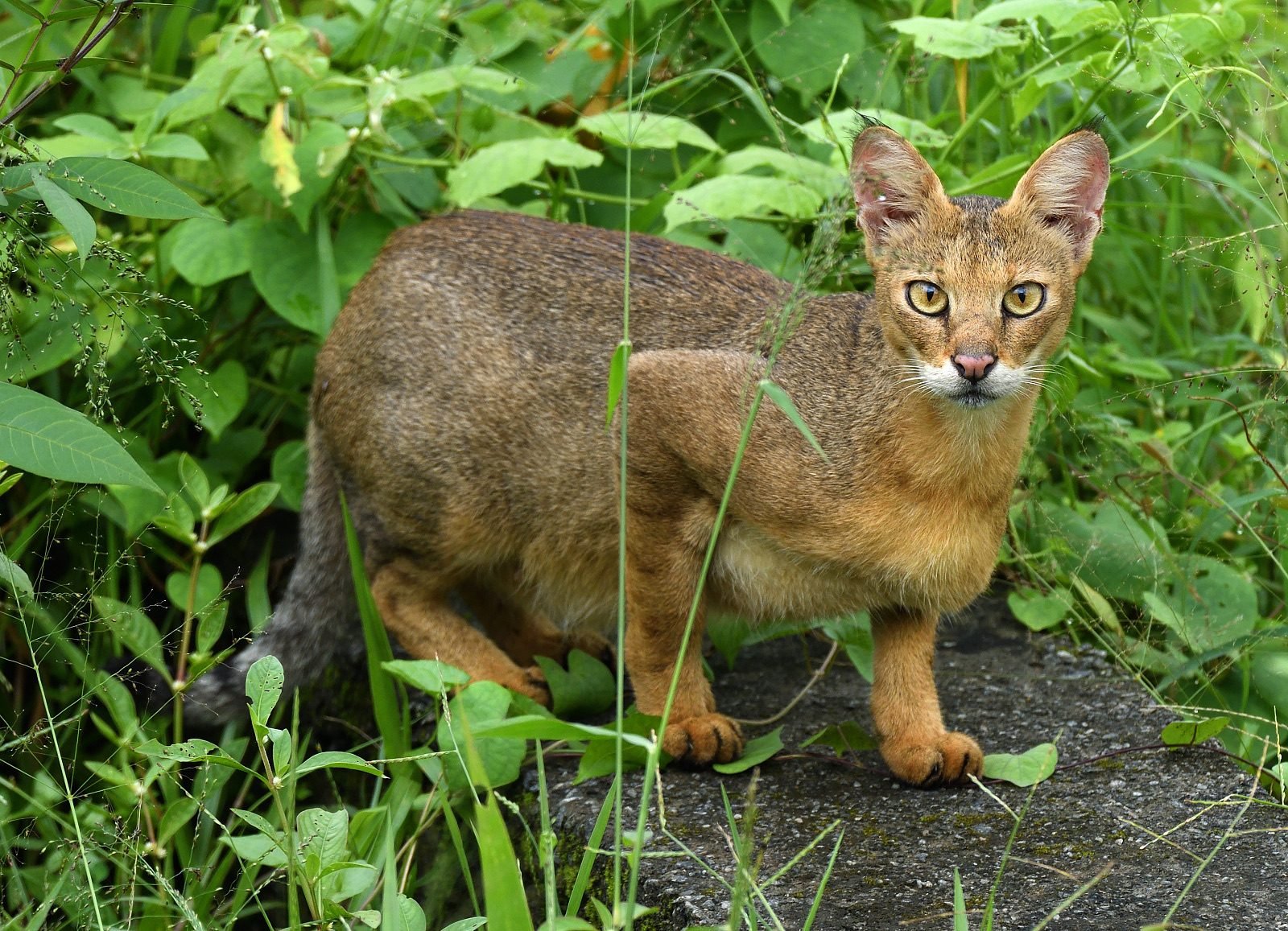
The Jungle Cat’s name is not a complete habitat guide. Looking at where it lives reveals a wider story of cover, water and human-shaped landscapes.
Common names can badly misrepresent ecology
Conceptual comparison, not measured data.Its world.
Its conservation.
Protect natural wetland edges
Reed beds, riparian thickets, and uncultivated strips provide den sites, concealment, and connected movement through developed land.
Secure poultry without poison
Strong enclosures and prompt husbandry reduce losses without exposing wild cats, scavengers, and other wildlife to toxic carcasses.
Map overlooked populations
Verified sightings, camera traps, and local reporting can clarify distribution where records are now scarce or outdated.
sunnyjosef · CC BY 4.0
Keep the method
in the picture.
Habitat records test the picture suggested by a name; names themselves are not ecological evidence.
What don’t we know?
Which changing landscapes retain enough cover and prey to support populations?
Geographic context
Parts of Africa & Asia.
This is geographic context, not a mapped distribution. Range polygons require taxon, date and reuse review before publication.
A different cat.
A different question.
Sources & Research Notes
Inherited research adapted to the locked editorial lesson; current assessment and independent scientific sign-off pending.
Assessment year and field-data period are different. A source check does not update an assessment.