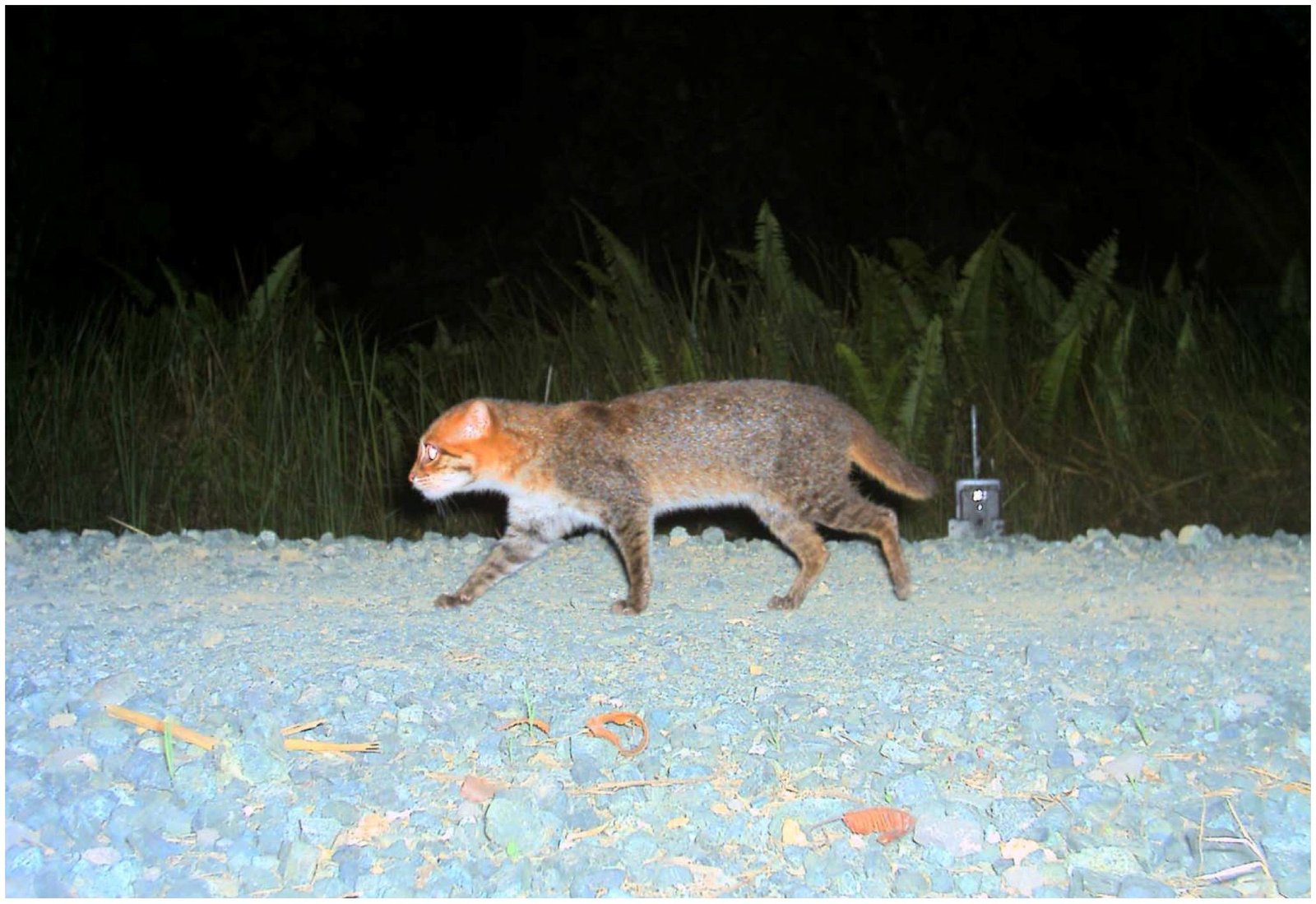
Andreas Wilting et al. · CC BY-SA 2.5

Specialisation has a cost.
The Flat-headed Cat’s connection to wet habitats makes habitat change especially consequential. When a specialist loses suitable places, apparently nearby alternatives may not serve the same purpose.
Extreme specialization leaves fewer alternatives when habitat disappears
Conceptual comparison, not measured data.Its world.
Its conservation.
Survey the overlooked waterways
Targeted camera trapping and careful field surveys can help establish where the species persists; sparse detections still leave gaps.
Keep water clean and connected
Protecting peatlands, river margins, natural flow, and aquatic prey addresses the ecological system behind the cat.
Build safeguards into working landscapes
Better plantation management, reduced chemical runoff, and removal of snares can improve survival beyond protected-area boundaries.
Andreas Wilting et al. · CC BY-SA 2.5
Keep the method
in the picture.
Field records and habitat studies test where this elusive cat actually occurs; sparse detections do not establish a robust global density.
What don’t we know?
Which remaining wet habitats still support the species?
Geographic context
Sundaland.
This is geographic context, not a mapped distribution. Range polygons require taxon, date and reuse review before publication.
A different cat.
A different question.
Sources & Research Notes
Inherited research adapted to the locked editorial lesson; current assessment and independent scientific sign-off pending.
- IUCN SSC Cat Specialist Group · Flat-headed cat
- Wilting et al. · Distribution model and conservation priorities
Assessment year and field-data period are different. A source check does not update an assessment.