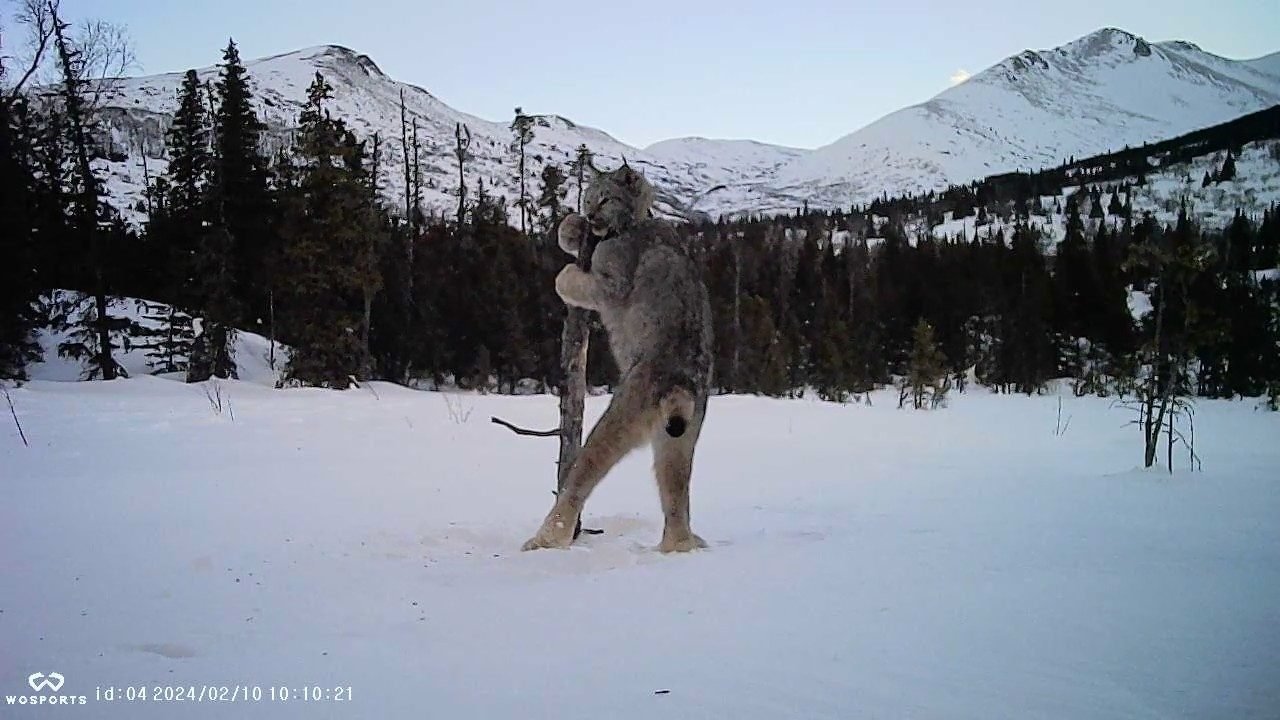
Matt Muir · CC BY 4.0
A decline can be part of a cycle.
The Canada Lynx’s close relationship with snowshoe hares puts time at the centre of its story. A downward stretch in a natural cycle is not the same thing as evidence of lasting decline.
A short decline can sit inside a longer natural cycle.
Conceptual pattern only. No measured abundance, dates or cycle length is plotted.Its world.
Its conservation.
Protect boreal mosaics
Landscape planning should retain both hare-rich regrowth and mature denning cover across connected watersheds and mountain systems.
Keep north–south corridors open
Cross-border connections allow dispersal from secure northern populations into vulnerable southern range.
Match harvest to the cycle
Season closures, quotas, and trap modifications can reduce mortality during hare lows and prevent incidental capture.
Keep the method
in the picture.
Long-term monitoring lets researchers compare predator and prey patterns across more than one part of a cycle.
What don’t we know?
How do changing snow and habitat conditions interact with natural cycles?
Geographic context
Northern North America.
This is geographic context, not a mapped distribution. Range polygons require taxon, date and reuse review before publication.
A different cat.
A different question.
Sources & Research Notes
Inherited research adapted to the locked editorial lesson; current assessment and independent scientific sign-off pending.
- IUCN SSC Cat Specialist Group · Canada lynx
- CATnews · Cats of the World: snapshots (2011; historical reference)
Assessment year and field-data period are different. A source check does not update an assessment.