
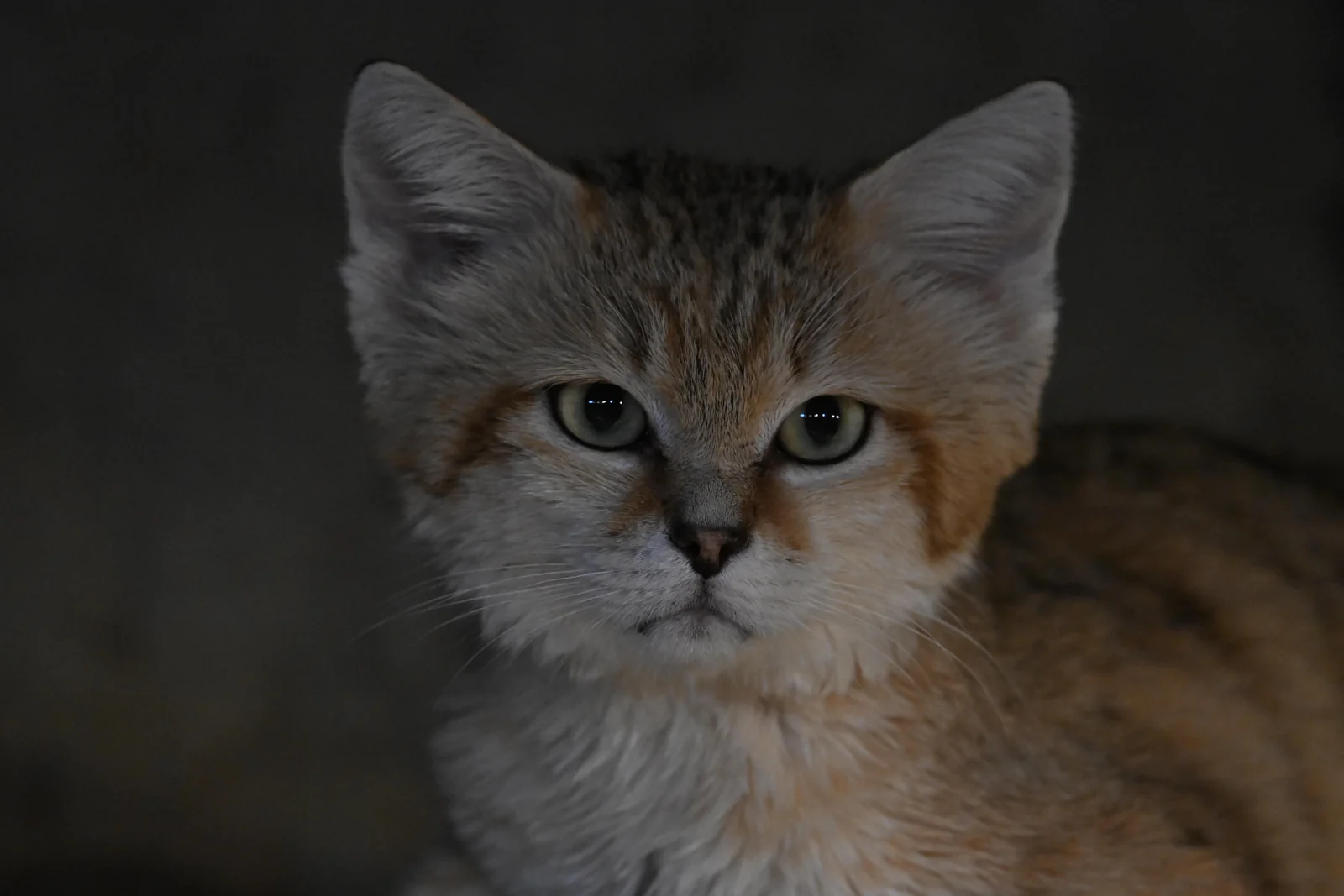
A desert can hide its cats.
The Sand Cat belongs to landscapes where monitoring is difficult. Sparse observations and density assumptions need careful handling before they become a population claim.
Desert specialists can be exceptionally difficult to monitor
Conceptual comparison, not measured data.Its world.
Its conservation.
Survey across borders
Standardized camera trapping, tracking, and shared records can reveal whether distribution gaps reflect absence or simply a lack of looking.
Protect desert structure
Managing grazing, vehicle access, development, and disturbance preserves vegetation, dens, and prey-rich microhabitats.
Reduce direct mortality
Dog management, safer fencing, anti-trafficking work, and alternatives to indiscriminate traps and poison address preventable losses.
Keep the method
in the picture.
Desert field surveys provide local evidence; extrapolation adds assumptions that must remain visible.
What don’t we know?
How do detection and density vary across different desert conditions?
Geographic context
North Africa, Arabia & Central Asia.
This is geographic context, not a mapped distribution. Range polygons require taxon, date and reuse review before publication.
A different cat.
A different question.
Sources & Research Notes
Inherited research adapted to the locked editorial lesson; current assessment and independent scientific sign-off pending.
Assessment year and field-data period are different. A source check does not update an assessment.