
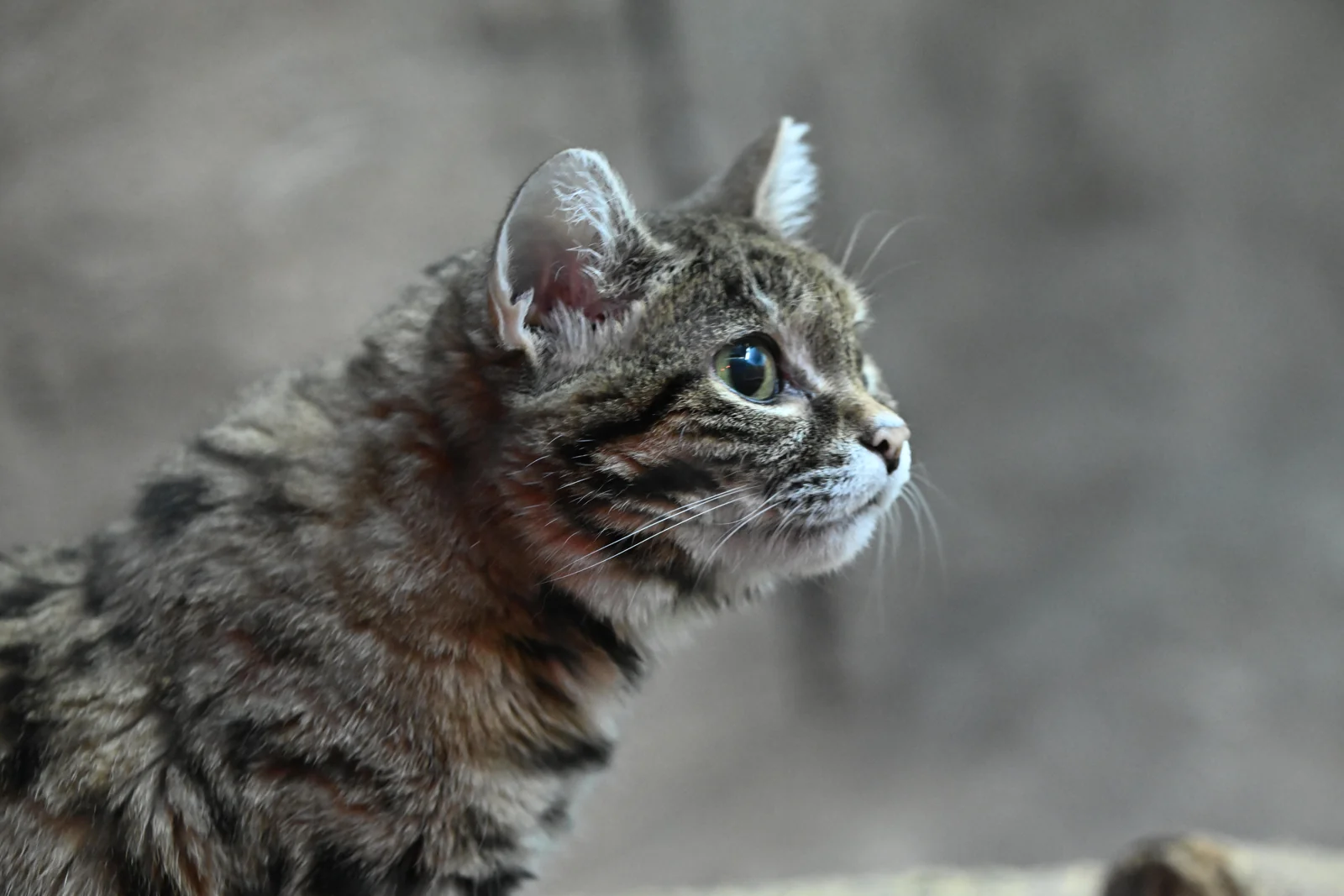
Small cat. Substantial needs.
A tiny body still needs prey, shelter and space. The Black-footed Cat’s size should invite curiosity about its ecological demands, not the assumption that a small patch of land is enough.
Small body does not mean small ecological demands
Conceptual comparison, not measured data.Its world.
Its conservation.
Follow individuals over time
Radio tracking, health checks, genetics, and reproduction data reveal survival patterns that brief surveys cannot.
Reduce preventable mortality
Safer predator-control practices, dog management, and road awareness can remove hazards without separating conservation from ranching.
Keep drylands biologically rich
Healthy grazing systems and intact burrow-forming wildlife protect the prey and shelter on which this cat depends.
Keep the method
in the picture.
Tracking and field observations can connect an individual’s movements with the resources it uses.
What don’t we know?
How do changing prey and land use affect survival across its range?
Geographic context
Southern Africa.
This is geographic context, not a mapped distribution. Range polygons require taxon, date and reuse review before publication.
A different cat.
A different question.
Sources & Research Notes
Inherited research adapted to the locked editorial lesson; current assessment and independent scientific sign-off pending.
Assessment year and field-data period are different. A source check does not update an assessment.