
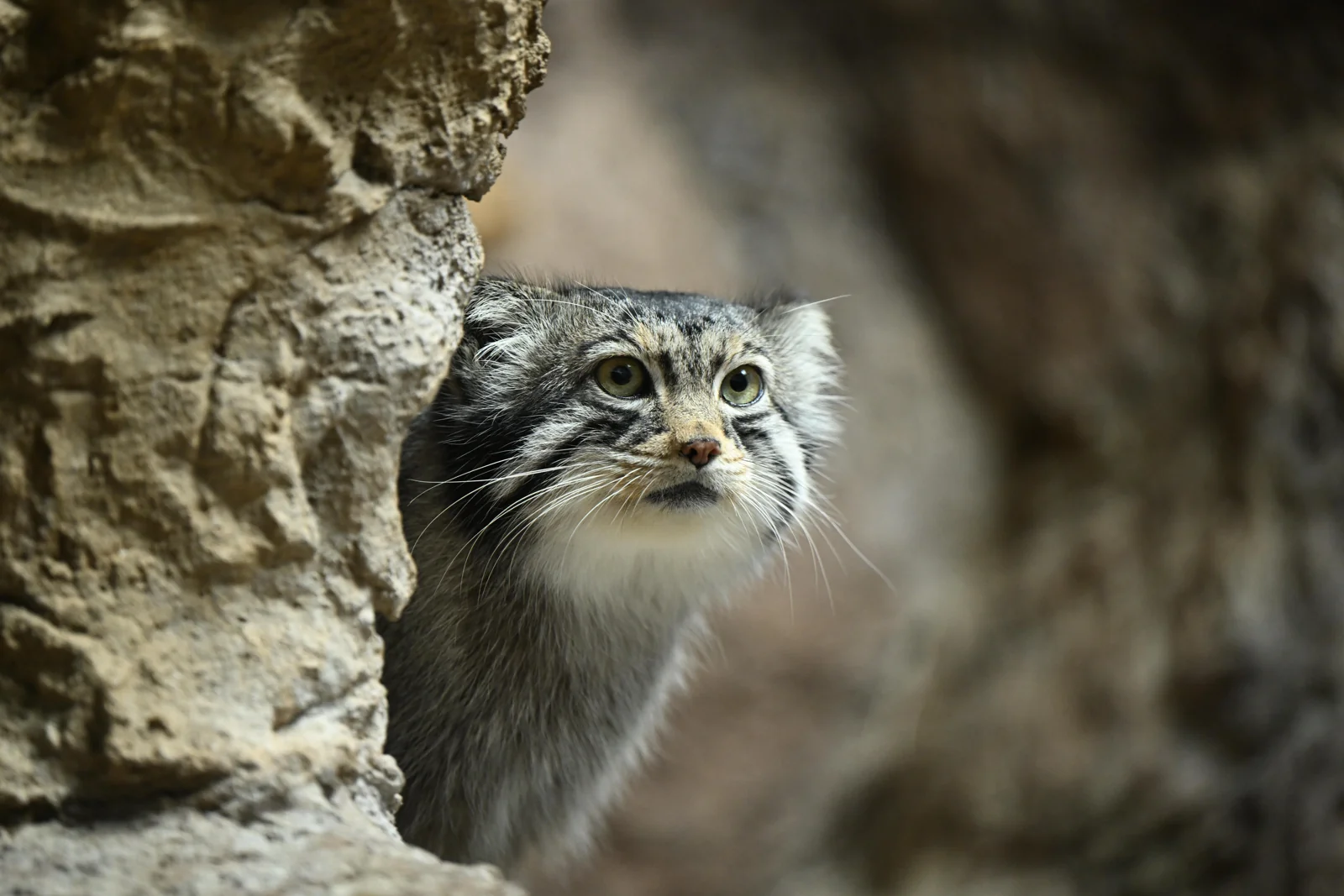
Lower risk is not full recovery.
Extinction risk and ecological recovery answer different questions. Pallas’s Cat helps separate the chance of disappearing from the extent to which a species is fulfilling its place in nature.
Lower extinction risk does not mean ecological recovery
Conceptual comparison, not measured data.Its world.
Its conservation.
Map cats and usable refuge
Range-wide surveys should record not only sightings but also prey, burrows, rocks, snow, and the human pressures shaping occupancy.
Keep prey and dens in the system
Pika and rodent communities, abandoned burrows, and rocky shelter are essential habitat features rather than background scenery.
Reduce avoidable deaths
Ranger training, safer trapping practices, dog management, and community-led enforcement can reduce poaching and accidental killing.
Keep the method
in the picture.
Risk assessments and recovery assessments use different criteria; one category cannot be substituted for the other.
What don’t we know?
How much do we know about the species’ ecological recovery across its range?
Geographic context
Central Asian highlands & steppe.
This is geographic context, not a mapped distribution. Range polygons require taxon, date and reuse review before publication.
A different cat.
A different question.
Sources & Research Notes
Inherited research adapted to the locked editorial lesson; current assessment and independent scientific sign-off pending.
- IUCN SSC Cat Specialist Group · Pallas’s cat
- Pallas’s Cat Working Group
- Pallas’s Cat International Conservation Alliance
Assessment year and field-data period are different. A source check does not update an assessment.