Andean Mountain Cat
Leopardus jacobita
Rare does not mean invisible.
Look closer ↓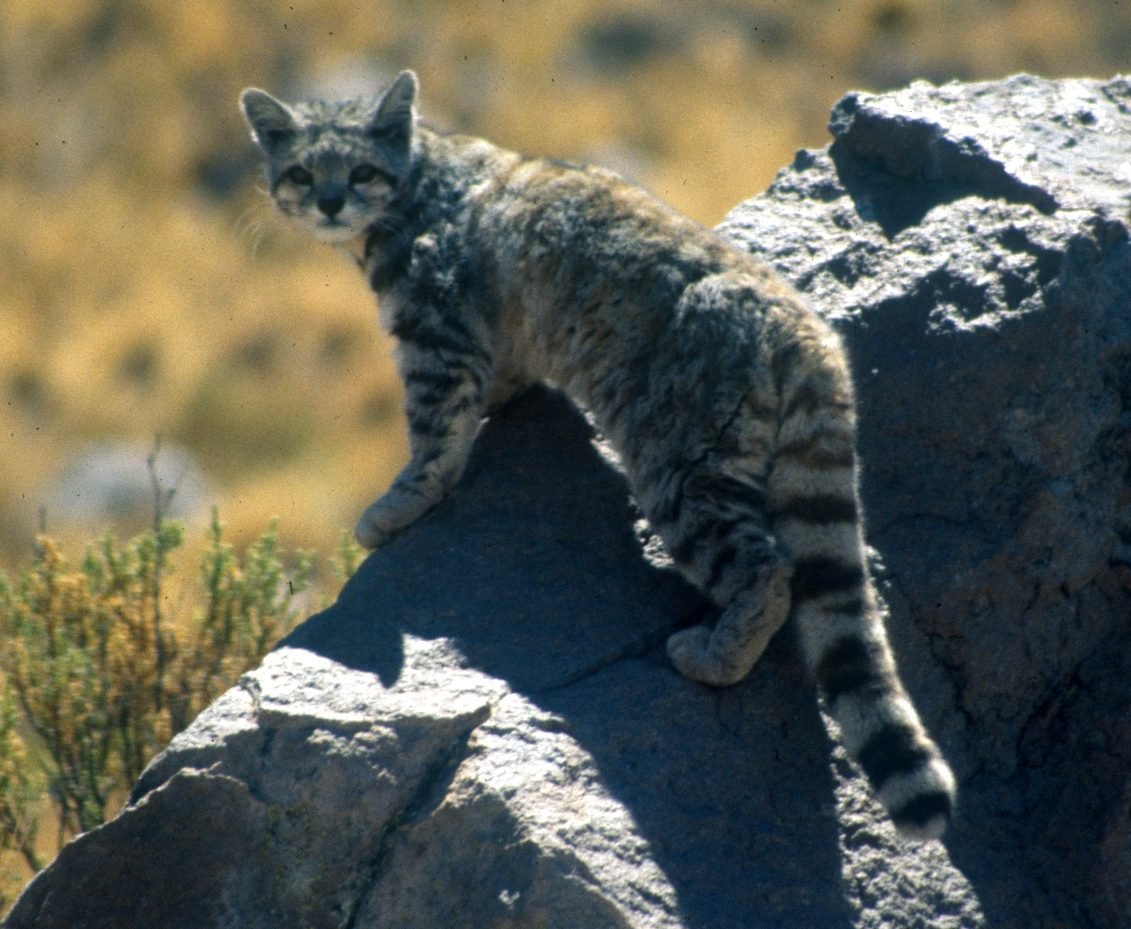
Jim Sanderson · CC BY-SA 3.0

Rare does not mean invisible.
Few encounters need not mean no knowledge. Careful fieldwork can bring a rare mountain cat into scientific view, linking scattered records to questions about its landscape and prey.
Rare does not mean scientifically invisible
Conceptual comparison, not measured data.Its world.
Its conservation.
Find the hidden populations
Camera traps, genetic evidence, and community observations refine distribution, population, and corridor priorities.
Protect connected mountain systems
Safeguarding rock habitat, wetlands, prey, and movement routes keeps the larger high-Andes community functioning.
Build conservation with communities
Education, locally led monitoring, dog management, and alternatives to hunting make protection durable on the ground.
Jim Sanderson · CC BY-SA 3.0
Keep the method
in the picture.
Camera traps and other field records can document occurrence even when direct encounters are uncommon.
What don’t we know?
Where are populations connected across the high-country landscape?
Geographic context
Andes of South America.
This is geographic context, not a mapped distribution. Range polygons require taxon, date and reuse review before publication.
A different cat.
A different question.
Sources & Research Notes
Inherited research adapted to the locked editorial lesson; current assessment and independent scientific sign-off pending.
Assessment year and field-data period are different. A source check does not update an assessment.