
Rusty-spotted Cat
Prionailurus rubiginosus
A new record. A better picture.
Look closer ↓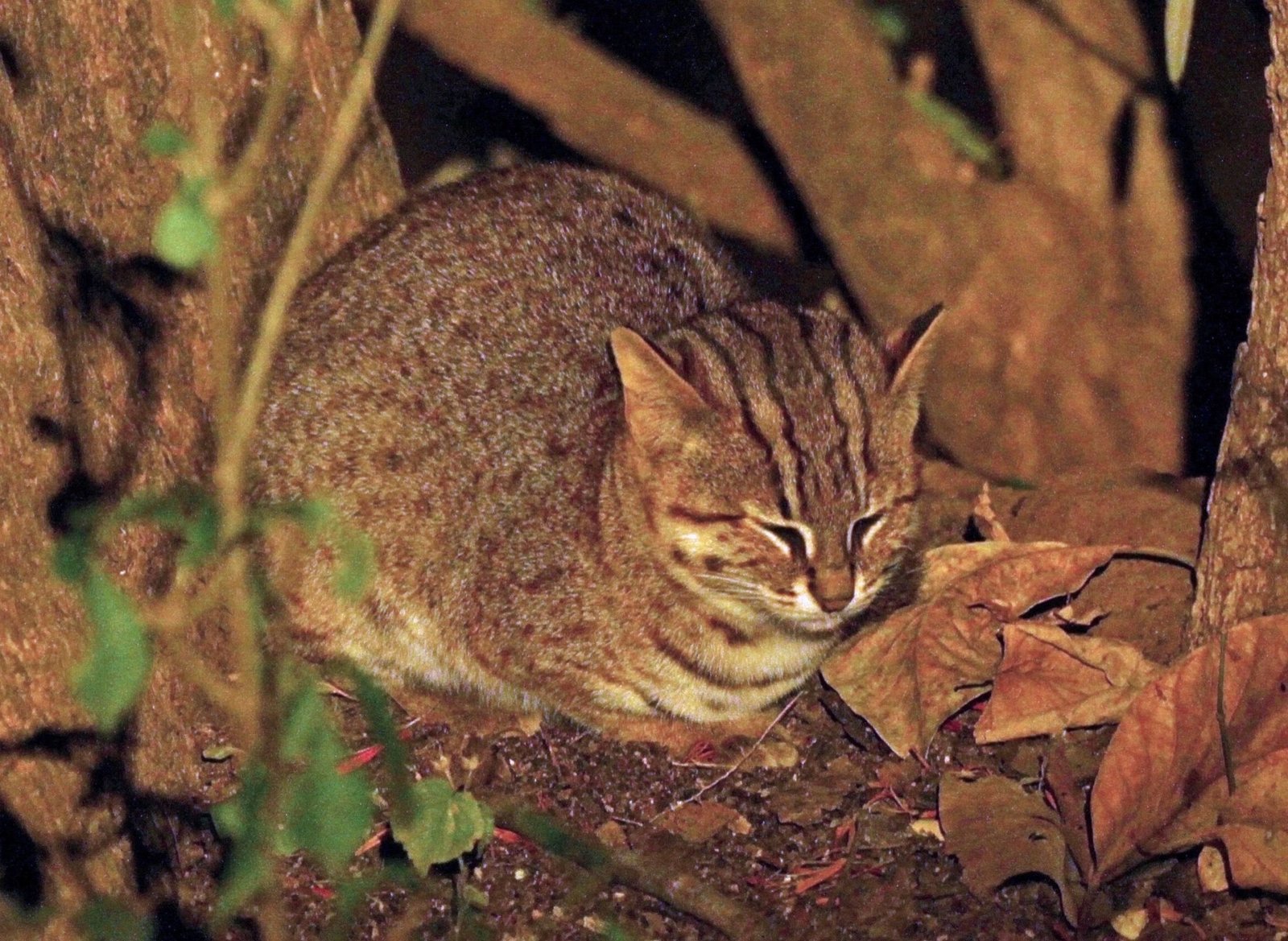
David V. Raju · CC BY-SA 4.0

A new record. A better picture.
Finding a Rusty-spotted Cat in a new place adds knowledge. It does not, by itself, demonstrate that the population has grown.
A new detection is not evidence of population growth
Conceptual comparison, not measured data.Its world.
Its conservation.
Build a reliable distribution picture
Verified sightings, camera traps, genetics, and community reporting can fill major gaps across India, Nepal, and Sri Lanka.
Make harvests and homes safer
Checking sugarcane before cutting, protecting poultry, managing dogs, and retaining scrub or rock cover can reduce avoidable deaths.
Measure long-term persistence
Repeated surveys outside reserves can distinguish breeding populations from occasional cats passing through cultivated land.
David V. Raju · CC BY-SA 4.0
Keep the method
in the picture.
A new record changes known occurrence. A trend needs comparable evidence through time.
What don’t we know?
Was the cat absent before, or had nobody detected it there?
Geographic context
Indian subcontinent.
This is geographic context, not a mapped distribution. Range polygons require taxon, date and reuse review before publication.
A different cat.
A different question.
Sources & Research Notes
Inherited research adapted to the locked editorial lesson; current assessment and independent scientific sign-off pending.
- IUCN SSC Cat Specialist Group · Rusty-spotted cat
- IUCN SSC Cat Specialist Group · Small Cat Report (2024; background report)
Assessment year and field-data period are different. A source check does not update an assessment.