
Bornean Bay Cat
Catopuma badia
A cat we know.
A life we barely do.
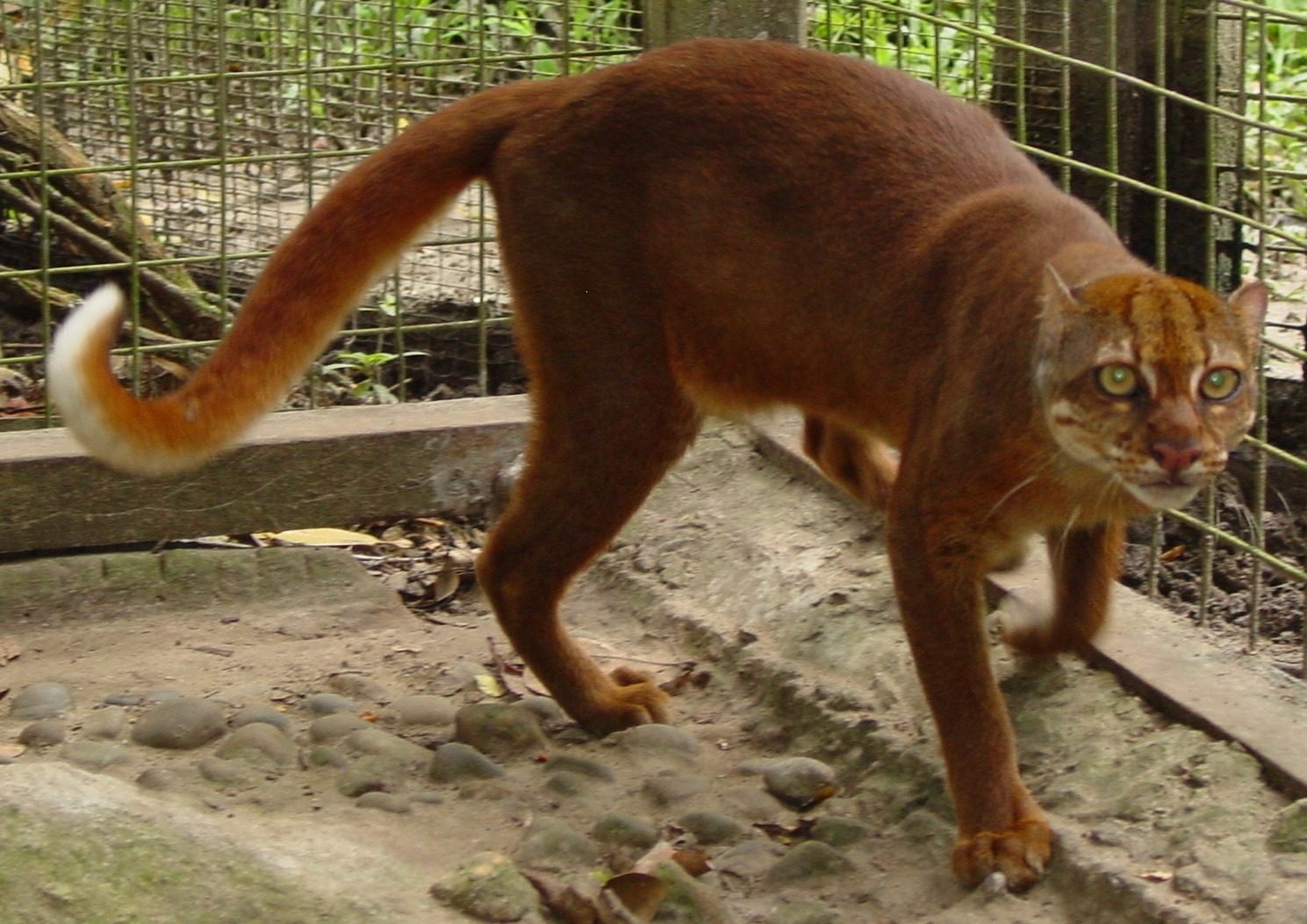
Jim Sanderson · crop by Abujoy · CC BY-SA 3.0

The blank spaces matter
A name and a photograph are only a beginning. For the Bornean Bay Cat, basic information about abundance and everyday ecology remains scarce. That uncertainty makes conservation decisions harder, even as forest habitat changes.
A detection answers “was it here?” It does not answer “how many are there?”
Conceptual evidence ladder; not measured coverage.Its world.
Its conservation.
Forest loss
Changing forests can remove habitat before its importance is fully understood.
Capture and snares
Hunting and capture add pressure to a little-known species.
Decisions with sparse evidence
Few detections make it difficult to understand where protection is most needed.
Jim Sanderson · crop by Abujoy · CC BY-SA 3.0
Keep the method
in the picture.
Camera traps establish that a cat passed a sampled place. Survey design and detection probability matter: a sparse record cannot by itself supply a global population count.
Why not give the familiar 2,200 estimate?
The specialist profile explains that this figure assumes a density of one animal per 100 km². It is not an empirical global count. Zoo-EV therefore keeps the public headline “Unknown.”
What don’t we know?
How many Bay Cats live across Borneo, which habitats support them best, and how are populations connected? These are practical conservation questions, not empty fields to fill with guesses.
Geographic context
Borneo.
This is geographic context, not a mapped distribution. Range polygons require taxon, date and reuse review before publication.
A different cat.
A different question.
Sources & Research Notes
Source check: 7 September 2026. Independent scientific sign-off remains pending.
Assessment year and field-data period are different. A source check does not update an assessment.