
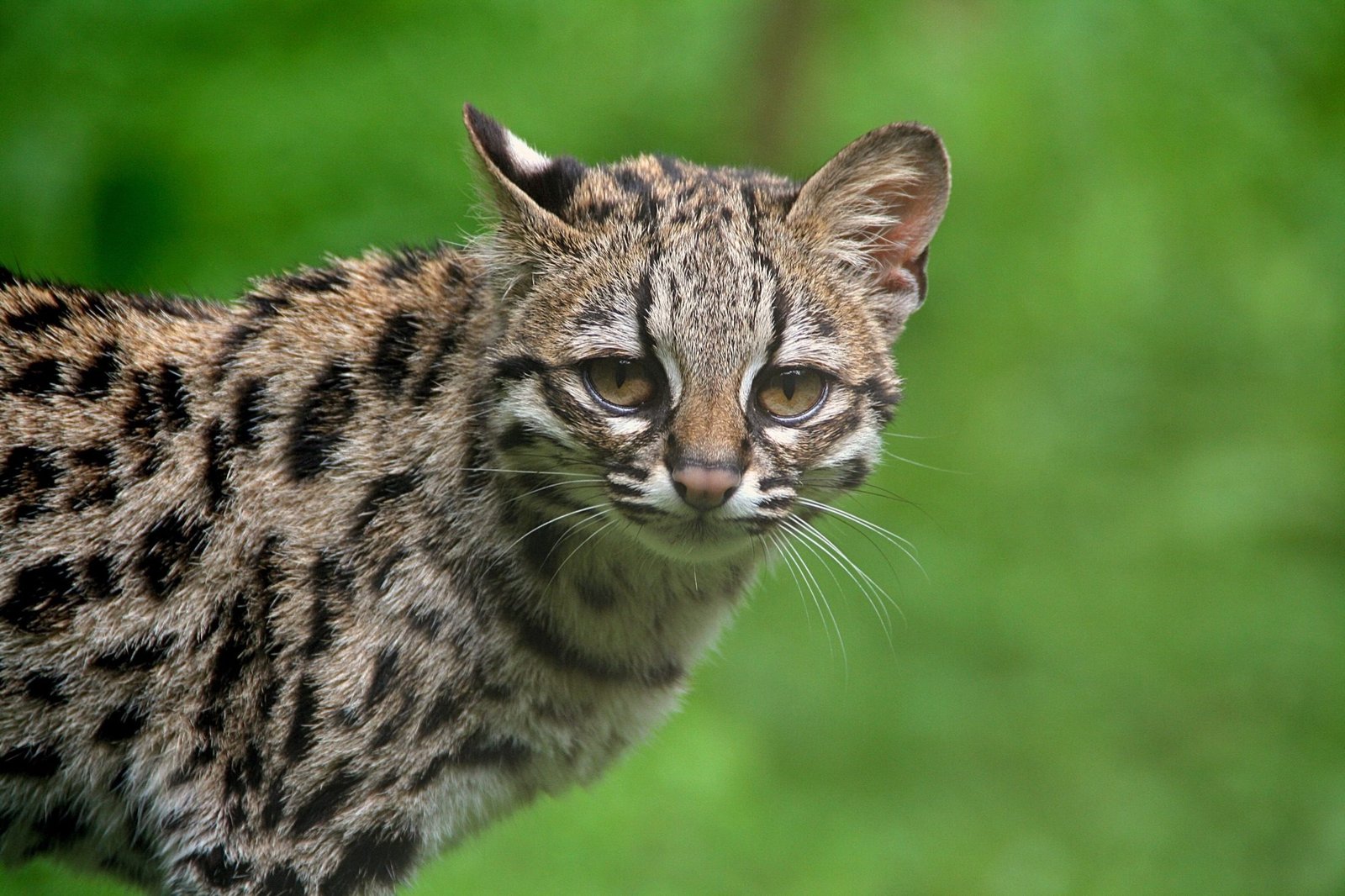
Clément Bardot · CC BY-SA 3.0

The study must fit the cat.
An animal that uses trees challenges a study concentrated on the ground. The Margay reminds us to match research methods to behaviour while avoiding easy explanations for every missing record.
Arboreal behavior changes how a species must be studied
Conceptual forest layers. No height, habitat preference or sampling coverage is quantified.Its world.
Its conservation.
Protect continuous tree cover
Native forest, gallery corridors, and structurally complex regrowth give margays places to rest, hunt, and move.
Study life beyond the climbing myth
Telemetry, camera traps, and demographic research can show how margays divide their time between canopy and ground.
Reduce mortality around fragments
Road planning, poultry protection, trade enforcement, and community response can make forest edges less dangerous.
Clément Bardot · CC BY-SA 3.0
Keep the method
in the picture.
Different camera placements and direct observations can sample different parts of a cat’s environment.
What don’t we know?
Which methods best capture its use of the forest above the ground?
Geographic context
Tropical & subtropical Americas.
This is geographic context, not a mapped distribution. Range polygons require taxon, date and reuse review before publication.
A different cat.
A different question.
Sources & Research Notes
Inherited research adapted to the locked editorial lesson; current assessment and independent scientific sign-off pending.
- IUCN SSC Cat Specialist Group · Margay
- CATnews · Cats of the World: snapshots (2011; historical reference)
Assessment year and field-data period are different. A source check does not update an assessment.