
Marbled Cat
Pardofelis marmorata
An empty camera is not an empty forest.
Look closer ↓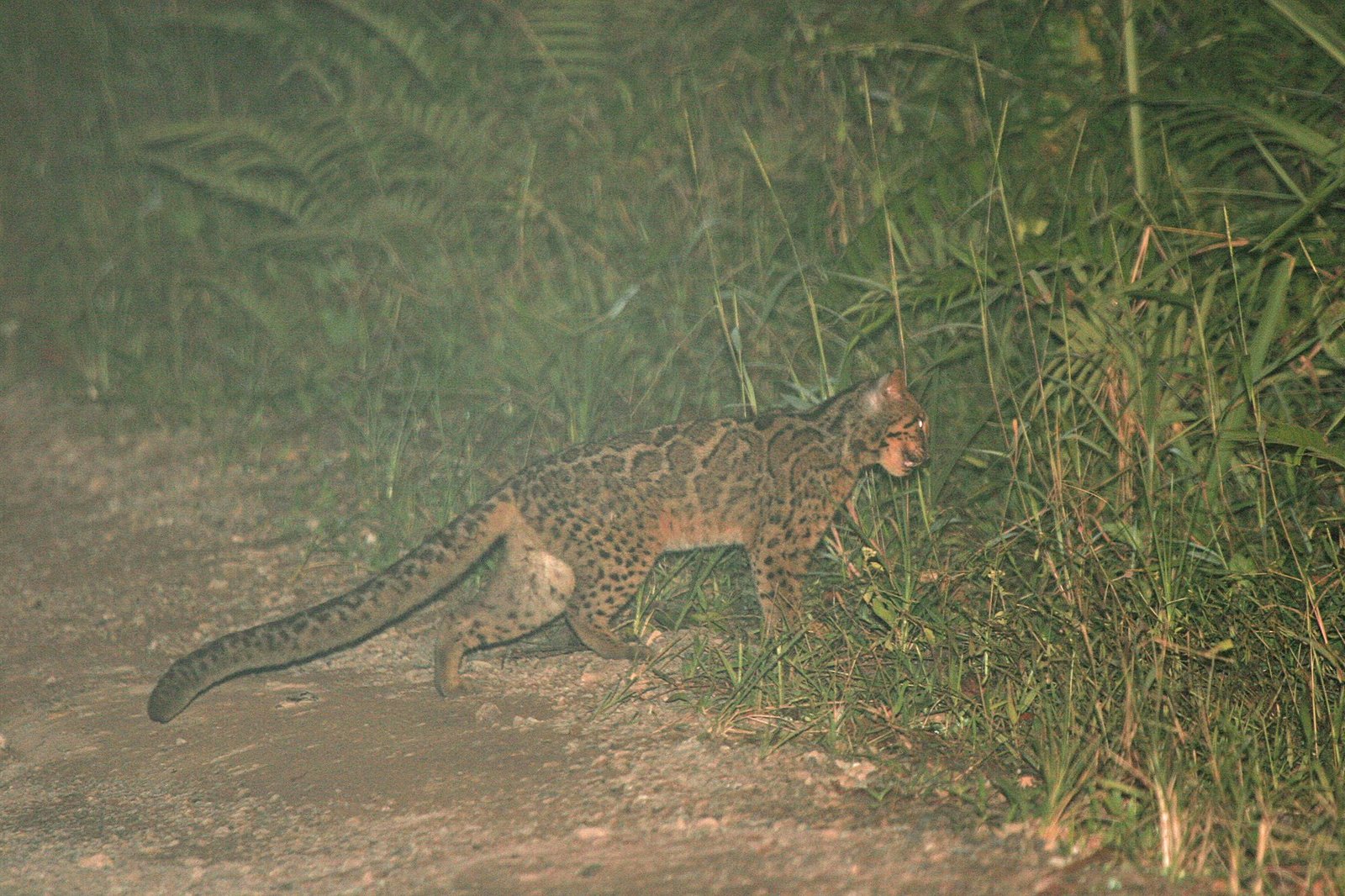
James Eaton · CC0 1.0

An empty camera is not an empty forest.
Low detection deserves careful interpretation. For the Marbled Cat, a sparse camera record should prompt questions about the study as well as about the animal.
Low detection requires careful interpretation
Conceptual forest layers. No height, habitat preference or sampling coverage is quantified.Its world.
Its conservation.
Survey across the full forest gradient
Camera traps on the ground and targeted canopy observation can compare primary, logged, restored, and agricultural forest mosaics.
Protect connected tree cover
Forest corridors and reduced fragmentation preserve movement routes across both branches and the landscape beneath them.
Remove indiscriminate snares
Patrols, community partnerships, and alternatives to wire snaring protect marbled cats along with many other forest species.
James Eaton · CC0 1.0
Keep the method
in the picture.
Camera records depend on where and how sampling happens; low detection alone does not establish low abundance.
What don’t we know?
How much of the knowledge gap reflects sampling limitations, habitat use or true scarcity?
Geographic context
South & Southeast Asian forests.
This is geographic context, not a mapped distribution. Range polygons require taxon, date and reuse review before publication.
A different cat.
A different question.
Sources & Research Notes
Inherited research adapted to the locked editorial lesson; current assessment and independent scientific sign-off pending.
Assessment year and field-data period are different. A source check does not update an assessment.