Leopard Cat
Prionailurus bengalensis
Wildlife in a working landscape.
Look closer ↓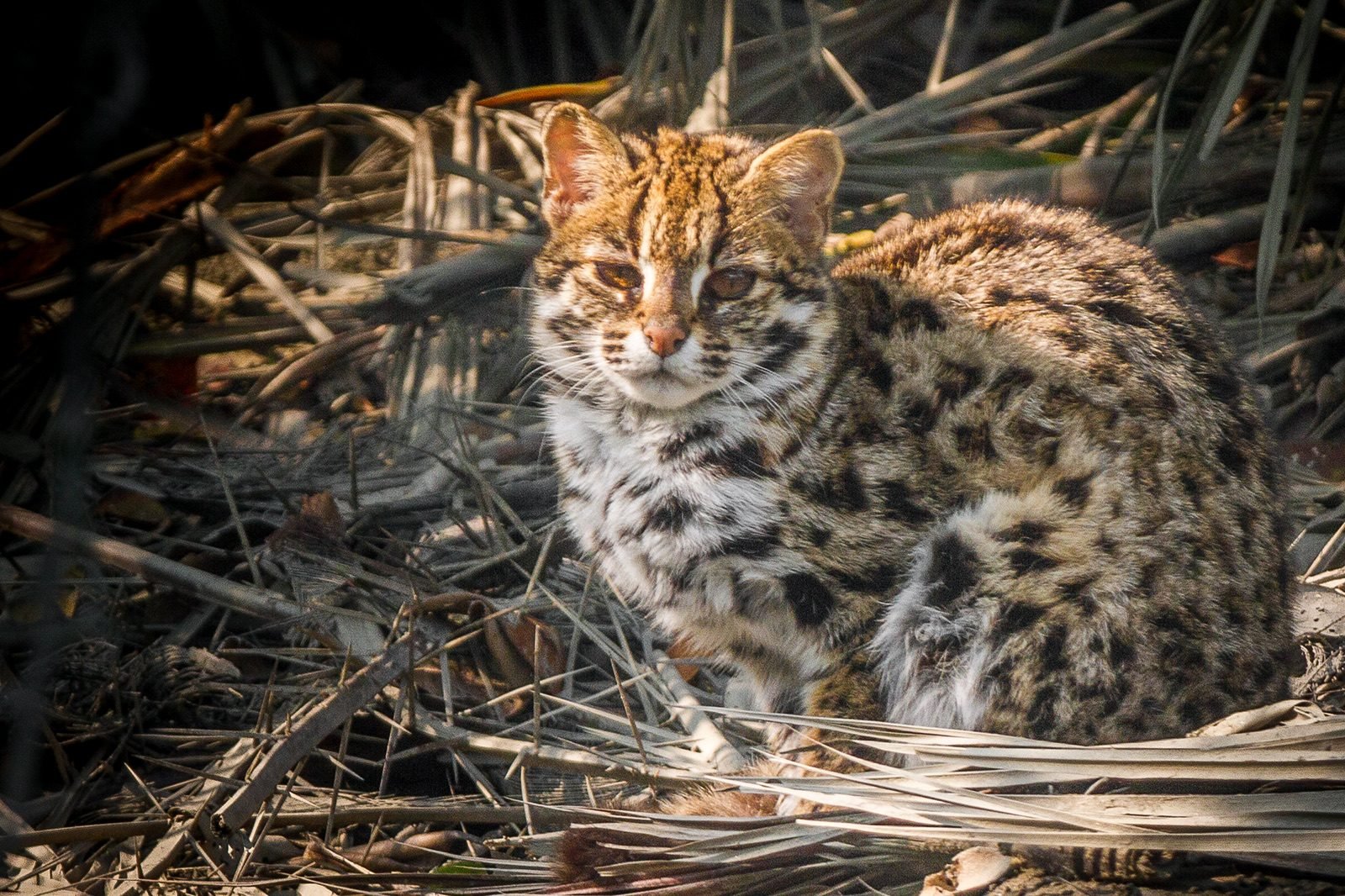
Soumyajit Nandy · CC BY-SA 4.0

Wildlife in a working landscape.
Some landscapes shaped by people still support Leopard Cats. That does not make every plantation, field or settlement equivalent to natural habitat.
Human-modified habitat can still function as wildlife habitat
Conceptual comparison, not measured data.Its world.
Its conservation.
Close regional knowledge gaps
Comparable camera-trap, genetic, and mortality studies can reveal where apparent tolerance is masking a decline.
Keep refuge beside altered land
Protecting forest fragments, river corridors, breeding cover, and safe movement routes makes working landscapes genuinely usable.
Target the immediate cause of loss
Snare removal, trade enforcement, poultry protection, road mitigation, and dog management should respond to evidence from each population.
Soumyajit Nandy · CC BY-SA 4.0
Keep the method
in the picture.
Field studies can document use of modified places; survival and reproduction require additional evidence.
What don’t we know?
Which features of human-modified landscapes make persistence possible?
Geographic context
Mainland Asia.
This is geographic context, not a mapped distribution. Range polygons require taxon, date and reuse review before publication.
A different cat.
A different question.
Sources & Research Notes
Inherited research adapted to the locked editorial lesson; current assessment and independent scientific sign-off pending.
- IUCN SSC Cat Specialist Group · Mainland leopard cat
- IUCN SSC Cat Specialist Group · Small Cat Report (2024; background report)
- 2017 revised taxonomy of Felidae
Assessment year and field-data period are different. A source check does not update an assessment.