
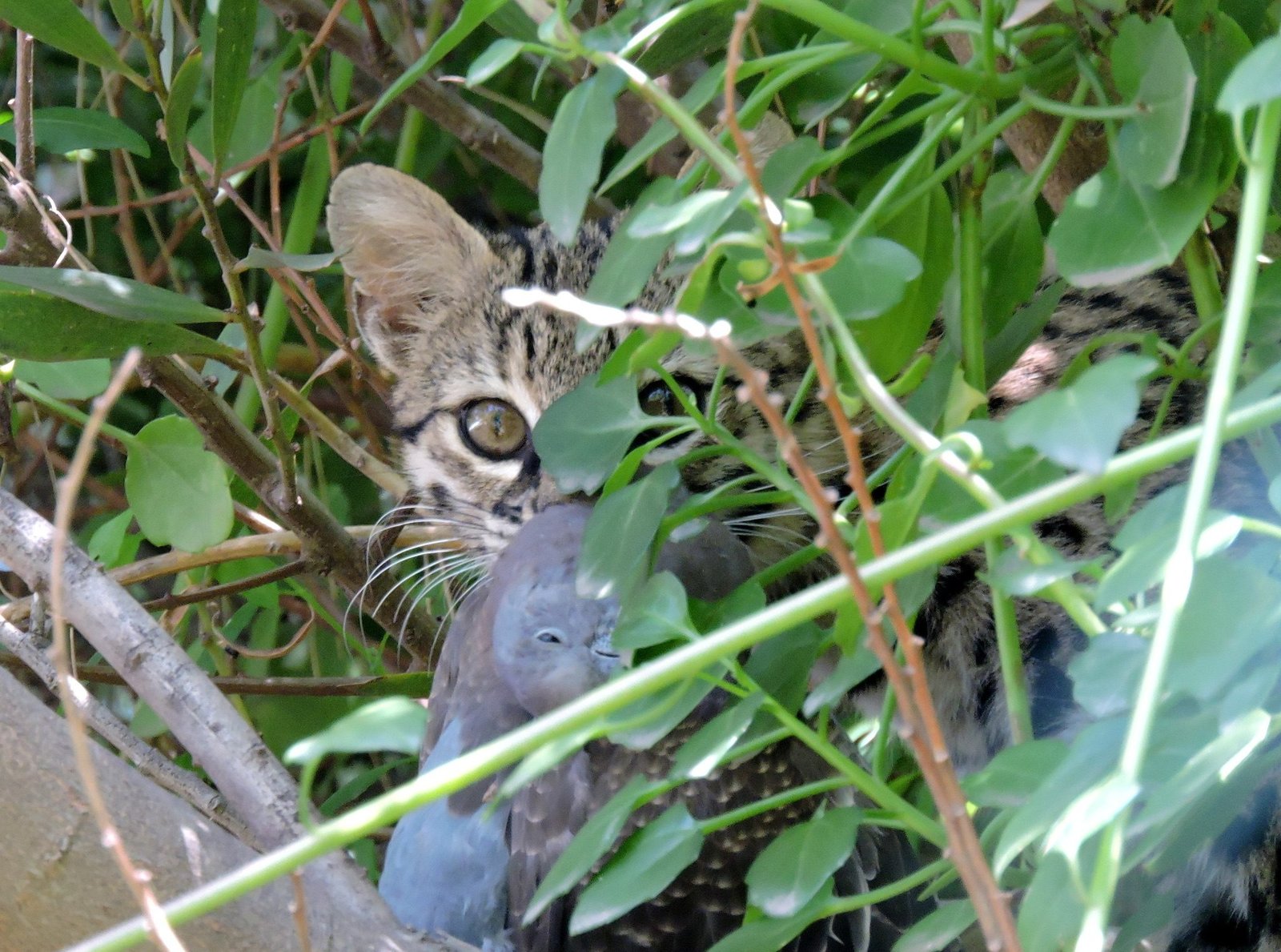
Diego Hernan Perez · CC BY 4.0

Threats do not stand still.
Conservation history matters. A pressure that once dominated a cat’s story may change, while other threats grow in importance. Geoffroy’s Cat invites us to keep the account current.
Threats change through time
Conceptual comparison, not measured data.Its world.
Its conservation.
Repeat local population studies
Comparable surveys over time can reveal declines that disappear inside a reassuring global range map.
Retain native cover and corridors
Wood patches, riparian strips, shrublands, and wetland edges give cats places to hunt, rest, communicate, and move.
Reduce preventable mortality
Poultry protection, dog management, road planning, and community response can address several immediate threats together.
Diego Hernan Perez · CC BY 4.0
Keep the method
in the picture.
Dated trade records and field research answer different questions; neither should be treated as timeless evidence.
What don’t we know?
How are current land use and local pressures changing the species’ prospects?
Geographic context
Southern South America.
This is geographic context, not a mapped distribution. Range polygons require taxon, date and reuse review before publication.
A different cat.
A different question.
Sources & Research Notes
Inherited research adapted to the locked editorial lesson; current assessment and independent scientific sign-off pending.
- IUCN SSC Cat Specialist Group · Geoffroy’s cat
- IUCN SSC Cat Specialist Group · Small Cat Report (2024; background report)
Assessment year and field-data period are different. A source check does not update an assessment.