
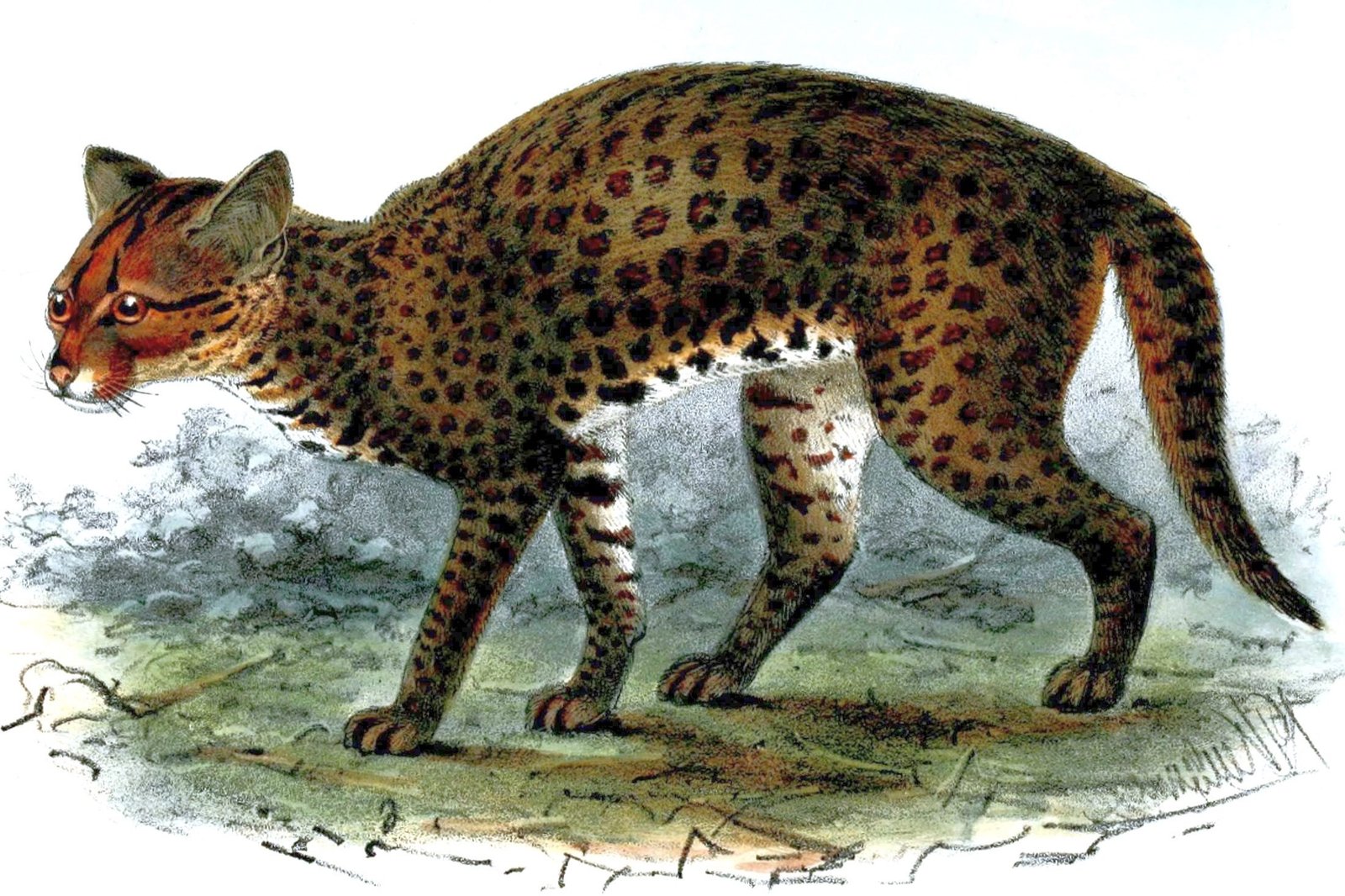
John Gerrard Keulemans · Public domain

Beyond the bigger cats.
The best-known African carnivores can dominate the picture. The African Golden Cat asks us to look into forests—and at the gaps in what we know about their smaller predators.
Hidden behind larger African carnivores; data scarcity matters
Conceptual comparison, not measured data.Its world.
Its conservation.
Fill the camera-trap gaps
Carefully designed surveys can map distribution, compare forest types, and establish reliable density and trend estimates.
Remove snares and reduce bushmeat pressure
Community partnerships, patrols, and livelihood alternatives protect both the cat and the prey base on which it depends.
Keep forest mosaics connected
Planning around roads, farms, mines, and logged concessions can preserve movement between remaining strongholds.
John Gerrard Keulemans · Public domain
Keep the method
in the picture.
Forest camera surveys add records of an easily overlooked cat; survey placement and effort shape the resulting picture.
What don’t we know?
Which forests support connected populations, and where are apparent gaps simply gaps in survey coverage?
Geographic context
West & Central Africa.
This is geographic context, not a mapped distribution. Range polygons require taxon, date and reuse review before publication.
A different cat.
A different question.
Sources & Research Notes
Inherited research adapted to the locked editorial lesson; current assessment and independent scientific sign-off pending.
- IUCN SSC Cat Specialist Group · African golden cat
- IUCN SSC Cat Specialist Group · Small Cat Report (2024; background report)
Assessment year and field-data period are different. A source check does not update an assessment.